


Have you ever wondered about the differences between textile and film printing? It’s not just a simple question. It’s key for anyone in the printing world. Whether you design, own a business, or just love printing, knowing these differences can change your projects a lot.
This guide will show you the main differences between these powerful printing methods. We’ll cover everything from how they work and what materials they use to their costs, quality, and future trends. You’ll learn how direct-to-garment (DTG) compares to direct-to-film (DTF) transfers.
By the end, you’ll know how to pick the best method for your next project. It could be a custom t-shirt or a fancy packaging prototype. Get ready to explore the exciting world of modern printing!
Key Takeaways
- Textile printing focuses on fabric applications, while film printing is often used for packaging and promotional materials.
- Understanding the processes can help you select the right method for your needs.
- Costs and quality can vary significantly between these two printing techniques.
- Future trends in printing are evolving, impacting both textile and film methods.
- Choosing the right technique can enhance the overall outcome of your project.
Introduction to Textile and Film Printing
The world of printing has changed a lot, with many new methods available. Textile and film printing are special because of what they can do. Knowing about these is key for designers and producers.
Digital printing has changed the game, moving beyond old ways. Techniques like DTG and DTF allow for detailed designs with great accuracy. This not only makes prints better but also speeds up production.
Overview of Printing Technologies
Textile printing is about putting designs on fabrics. It uses screen printing, rotary printing, and digital printing. Digital printing is getting more popular because it’s flexible and can make bright colors.
Film printing is mainly for graphics and signs. It transfers images onto film, perfect for lasting uses. Film printing is versatile, making high-quality items that last.
Importance in Modern Design
In today’s design world, textile and film printing are very important. They let artists turn digital ideas into real things. This is true for unique clothes or big signs, making the industry more creative.
Also, these technologies are easy to use, so anyone can make professional prints. This openness encourages more creativity and innovation, building a strong community of designers.
Exploring textile and film printing shows each has its own uses and advantages. Knowing these differences helps in making better design and production choices.
What is Textile Printing?
Textile printing is a mix of art and tech that makes fabric come alive. It adds color, patterns, and designs to fabrics. From ancient block printing to today’s digital methods, it’s a craft that’s grown a lot.
Definition and Techniques
Textile printing is about putting designs on fabric using different ways. Direct-to-Garment (DTG) printing is a popular method. It uses a special inkjet printer to spray ink directly onto the fabric.
Printtoo says DTG needs fabric pre-treatment for the ink to stick well, mainly on 100% cotton.
Screen printing is another old method. It’s good for making bold, simple designs in big numbers. It uses a stencil and layers of ink to print the design.
Types of Textile Printing Methods
There are many textile printing methods, each with its own benefits:
| Method | Description | Best For |
|---|---|---|
| DTG Printing | Direct application of ink onto fabric using an inkjet printer. | Custom designs and small runs. |
| Screen Printing | Using stencils to apply ink layers on fabric. | Bold graphics and large quantities. |
| Heat Transfer | Applying designs using heat and pressure. | Personalized items and detailed designs. |
| Block Printing | Hand-carved blocks used to stamp designs onto fabric. | Unique, handmade prints. |
Applications in Fashion and Decor
In fashion, textile printing lets people make personalized clothes. You can get unique t-shirts, hoodies, and more that show off your style. Custom tote bags and accessories are also big hits, with designs that really pop.
In home decor, it’s used for things like upholstery, curtains, and more. It lets people show off their creativity in their homes. This makes textile printing key for designers and anyone who loves to decorate.
What is Film Printing?
Film printing, also known as Direct to Film (DTF) printing, is a new technique used in many fields. It prints designs on a special PET film. Then, this film is transferred to fabric using heat. This method is both interesting and effective, making high-quality prints on many materials.
It’s important to know about film printing if you’re interested in modern printing. We’ll look at what film printing is, its uses, and its benefits.
Definition and Characteristics
Film printing uses a special indirect transfer process. First, a design is printed on a coated PET film. Then, a hot-melt adhesive powder is added to the ink. The extra powder is removed, and the adhesive is melted in an oven.
This makes a strong transfer ready to be applied to different fabrics.
Common Uses of Film Printing
Film printing is versatile and works well on many materials. It’s great for printing on:
- Polyester blends
- Nylon
- Leather
This makes it a top choice for custom items, promotional goods, and even luxury fashion.
Advantages of Film Printing
Film printing has several key benefits:
| Advantage | Description |
|---|---|
| Versatility | Works on a wide range of fabrics and colors. |
| No Pre-Treatment Required | Saves time and money by not needing fabric pre-treatment. |
| Advance Transfers | Allows for making transfers ahead of time for quick use. |
These benefits make film printing a great choice for businesses wanting high-quality prints fast.
Key Differences Between Textile and Film Printing
It’s important to know the differences between textile and film printing. They serve different purposes and have different effects on materials, durability, and the environment.
Material Compatibility
Textile printing is great for natural fibers. For example, Direct-to-Garment (DTG) printing works best on 100% cotton. It makes the fabric soft and vibrant.
Film printing, like Direct-to-Film (DTF), is more versatile. It sticks well to many materials, including cotton, polyester, and leather. This is because of its adhesive layer.
Durability and Longevity
Both methods can make prints last a long time. A well-done DTG print becomes part of the fabric, resisting fading and wear. A DTF transfer, when pressed right, stays flexible and intact after many washes.
So, both methods can last a long time. But, how long they last depends on the materials and the printing process.
Environmental Impact
The environmental impact of these methods is key. DTG printing uses water-based inks, which are better for the planet. This makes it a favorite among eco-friendly brands.
DTF printing, on the other hand, uses plastic film and adhesive powder. This can be bad for the environment. But, the industry is working on making film printing more sustainable.
| Aspect | Textile Printing | Film Printing |
|---|---|---|
| Material Compatibility | Best on natural fibers (e.g., cotton) | Adheres to various materials (e.g., cotton, polyester, leather) |
| Durability | Ink bonds with fabric for longevity | Flexible layer on top for durability |
| Environmental Impact | Uses water-based inks, more eco-friendly | Involves plastic film; sustainable options emerging |
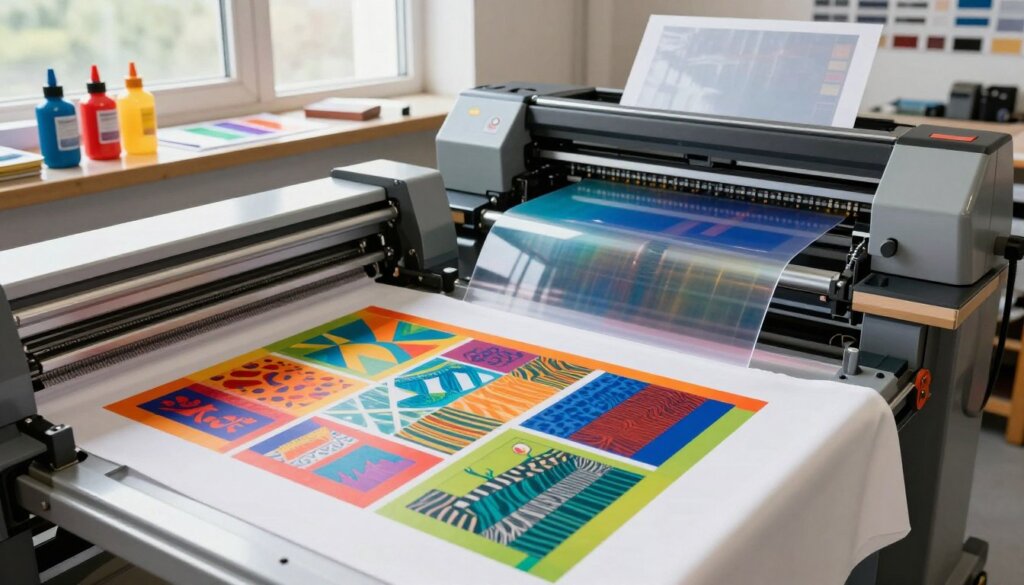
The Printing Process: Textile vs. Film
Understanding the printing process is key when comparing textile printing vs film printing. Each method has its own steps, leading to different results in quality and use. Let’s look at the unique steps in both processes.
Steps in Textile Printing
The textile printing process, like Direct-to-Garment (DTG) printing, starts with pre-treating the garment. A special liquid is applied to help the ink stick to the fabric. Then, the garment is heat-pressed to dry the pre-treatment flat, making it ready for printing.
Next, the garment is placed on the printer’s platen. The DTG printer jets water-based inks directly into the fabric, creating vibrant colors and detailed designs. After printing, the garment is cured in a dryer or under a heat press. This sets the ink and makes it last longer.
Steps in Film Printing
The film printing process, like Direct-to-Film (DTF) printing, takes a different route. First, the design is printed in reverse on a DTF film. This is key for getting the design right.
Then, a hot-melt adhesive powder is spread over the wet ink. The film is heated, melting the powder into a solid adhesive layer. To transfer the design, the film is pressed onto the substrate with a heat press for about 15 seconds. After, the film is peeled away cold, showing a vibrant and lasting print that sticks well to various surfaces.
Ink Types Used in Textile and Film Printing
The ink you choose is key in both textile and film printing. It changes how the final product looks, feels, and lasts. Knowing about these inks helps get the best results in your work.
Types of Inks for Textile Printing
Water-based inks are the top pick for textile printing, like DTG printing. They soak into natural fibers like cotton, making prints feel like part of the fabric. This makes the clothes soft and comfy to wear.
Plastisol inks are used in traditional textile printing. They give bright colors and last long. But, they don’t feel as soft as water-based inks.
For special jobs, like printing on leather, special dyes are used. For example, 1:2 metal complex dyes dry without needing hot steam. This helps keep leather soft and intact.
Types of Inks for Film Printing
Film printing uses its own set of inks. In DTF printing, CMYK water-based inks are used on coated films. A pure white ink is also used for the underbase to make colors pop on dark surfaces.
DTF printing also needs hot-melt adhesive powder. This powder helps stick the design to the surface during heat pressing. Together, these inks and adhesive create a high-quality finish that sticks well.
Cost Considerations
It’s important for businesses to understand the costs of different printing methods. The prices for textile and film printing can change a lot. This affects how you decide what to use for your needs.
Cost of Textile Printing
Textile printing, like direct-to-garment (DTG), can cost more than other options. This is because it uses more ink per print. For dark clothes, you often need a white base layer, which adds to the cost.
Also, using special fluids and labor increases the cost per item. DTG is better for small, detailed prints. It’s not the best for big orders. But, it’s great for detailed designs, even if it’s more expensive.
Cost of Film Printing
Film printing, like direct-to-film (DTF), is often cheaper. DTF uses less ink because it doesn’t always need a white base. This can save a lot, mainly for big orders.
DTF also lets you print many designs on one sheet of film. You can save on waste and setup time. While buying a good DTF printer and oven costs a lot upfront, the lower ink costs and versatility make it worth it for many shops.
| Printing Method | Initial Costs | Per-Print Costs | Efficiency |
|---|---|---|---|
| Textile (DTG) | Higher due to equipment and setup | Higher due to ink and pre-treatment | Best for small runs |
| Film (DTF) | Significant initial investment | Lower due to reduced ink usage | Efficient for bulk orders |
Customization Options
Customization is key in both textile and film printing. It lets you add personal touches to your work. Each method has its own strengths, so it’s important to know what they offer.
Customization in Textile Printing
Textile printing, like Direct-to-Garment (DTG), is great for photorealistic detail. It lets you create:
- Complex designs with many color tones
- Fine lines and detailed gradients
- One-of-a-kind items on demand
DTG is perfect for making custom t-shirts that really pop. But, it works best on cotton-rich fabrics. This might limit your design choices. Yet, it’s loved by artists and designers for its vibrant, detailed images.
Customization in Film Printing
Film printing, like Direct-to-Film (DTF), offers its own flexibility. It allows for:
- Transfers on various materials
- Sharp, detailed designs with bright colors
- Quick use of pre-made transfers
DTF is all about versatility. It’s great for customizing polyester sports jerseys, denim jackets, and even leather bags. This method is perfect for quick custom merchandise creation.
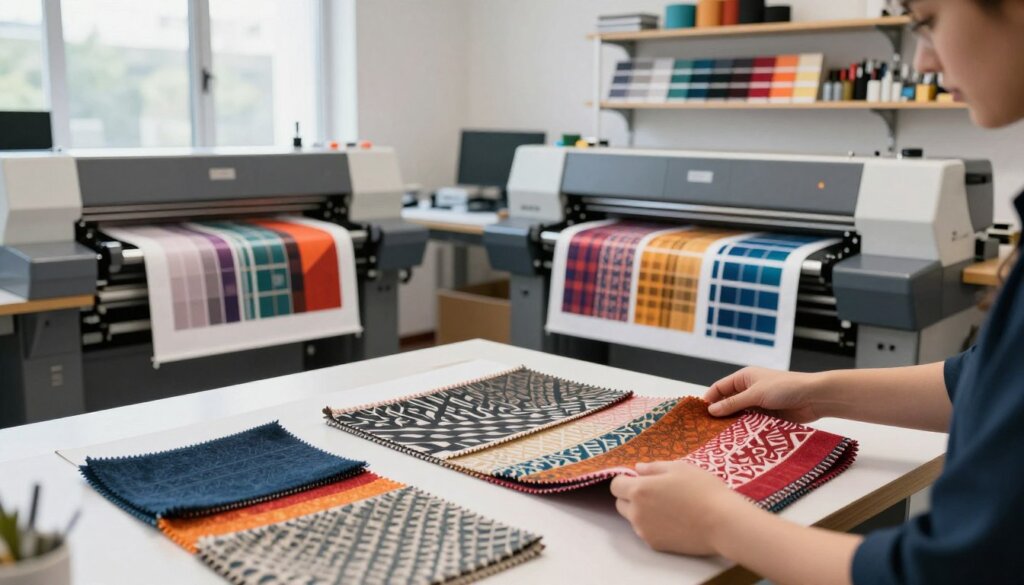
Both textile and film printing offer amazing customization options. But they do it in different ways. Knowing these differences helps you pick the best method for your projects.
Quality and Finish
The quality and finish of printed textiles and films are key to their appeal. When picking materials for fashion or decor, knowing these details is important. It helps ensure you get the look you want.
Texture and feel are big in quality textile printing. For example, Direct-to-Garment (DTG) printing makes prints almost invisible. The ink blends into the fabric, giving a smooth finish. This is great for luxury fashion and casual wear, where comfort matters.
Direct-to-Film (DTF) printing offers a different look. It adds a soft, shiny layer to the fabric. This layer makes colors pop, even on dark materials. While you can feel it, a good DTF print is soft and stretches well, unlike old vinyl transfers.
Choosing between an invisible finish and a vibrant, tactile one depends on what you like. Whether you prefer DTG’s subtle elegance or DTF’s dynamic feel, knowing the difference helps you choose wisely for your projects.
Drying and Curing Processes
Drying and curing are key steps in making sure printed textiles and films are top-notch. Each step is vital for prints that last and look great.
With Direct-to-Garment (DTG) printing, drying has two parts. First, a special solution is applied to the garment. Then, it’s dried with a heat press to get a smooth surface. Next, the garment is cured at a certain temperature. This makes the print stay on even after washing.
Curing in film printing is different. After adding adhesive powder to the ink, the film goes through a curing oven or heat press. This melts the powder into a strong adhesive layer. The final step is applying the film to the garment with the right heat press settings.
“Proper curing is the secret to a long-lasting print.”
In summary, getting drying and curing right is key for quality prints in textiles and films. Each step is important for prints that are both durable and vibrant.
Sustainability Factors
The printing industry is changing, with a big focus on being green. As people care more about the planet, both textile and film printing are getting greener. This change is key to lessening harm to the environment and promoting better ways to make things.
Direct-to-Garment (DTG) technology is a big step forward in textile printing. It uses water-based, safe inks that are good for the planet. DTG has many benefits:
- Minimal Waste: It only uses ink where it’s needed, cutting down on waste.
- Natural Materials: It works well with clothes made from organic and natural fibers, making products last longer.
- High Quality: It creates bright, lasting prints that look great.
In film printing, things are also getting greener. Companies like Cowint are making films that can break down and be recycled. The good things about green film printing are:
- On-Demand Printing: It helps avoid making too much and wasting it.
- Durability: Prints last a long time, so you don’t need to replace them as often.
- Eco-Friendly Materials: Using films that can be recycled helps the planet.
“Sustainability is not just a trend; it’s a fundamental shift in how we approach printing.”
By going green, the printing world can make a big difference. It’s a step towards a better future for everyone.
Popular Industries Using Textile Printing
Many industries rely on textile printing. It makes products look better and allows for custom designs. Let’s see how three big sectors use it.
Fashion Industry
The fashion world loves new ideas and creativity. Textile printing is key here. Designers use direct-to-garment (DTG) printing for fancy clothes. It makes them feel soft and look real.
This method is great for special editions and small runs. It lets new designers start big without a lot of stock.
Home Furnishings
In home decor, textile printing brings life to custom items. Interior designers use it for unique curtains, pillowcases, and more. They can make spaces that show off personal style.
They can print on many materials. This lets them create designs that fit individual tastes.
Sportswear
Sportswear gets a lot from textile printing. It keeps moisture-wicking clothes working well. This is key for athletes.
It also lets teams add custom names, numbers, and logos. These prints stay good even when the fabric stretches. They don’t crack or lose shape.
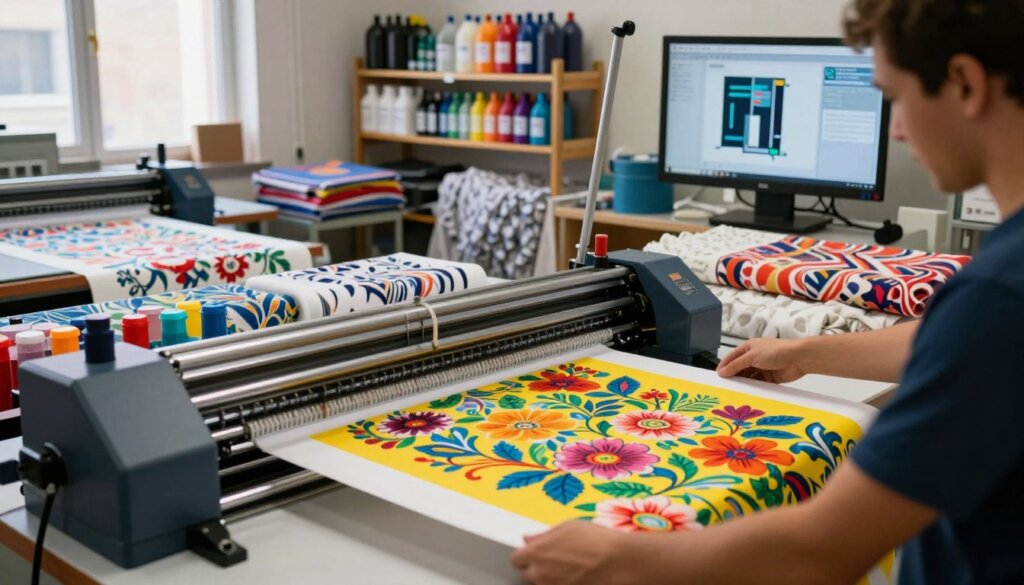
Textile printing is vital in these fields. It opens doors for creativity and custom work. As these areas grow, so will the importance of textile printing.
Popular Industries Using Film Printing
Many industries are using film printing to make a big impact. It’s not just about bright colors. It also brings versatility, which is key for many uses. Let’s see how film printing is changing graphic design, signage, and packaging.
Graphic Design
In graphic design, printing on film is a big deal. Designers use Direct-to-Film (DTF) printing for amazing promotional items. Think about custom tote bags, caps, and mousepads with cool logos that grab your attention.
As one designer said,
“Film printing lets us explore new creativity, making our designs stand out like never before.”
Signage and Displays
The signage and displays world relies on big film printing. It makes high-impact banners, window graphics, and displays that are flexible and easy to put up. These visuals grab attention, helping businesses shine in tough markets.
Also, film printing makes outdoor signs last, keeping designs bright even in bad weather.
Packaging Solutions
Film printing is great for packaging too. It lets you make premium, short-run custom packaging or special edition boxes. The finish adds a touch of class that buyers love.
It also works on unusual materials like wood, leather, and plastics. This lets brands create a unified look across different touchpoints.
Future Trends in Textile and Film Printing
The future of printing is set to see big changes. These changes will affect both textile and film printing. They come from new technologies and a focus on being green.
In textile printing, we’re moving towards single-step, pigment-based digital printing. This method is better for the planet because it uses no water and doesn’t need extra treatments. It works on any type of fiber. Also, 3D-textured prints and direct-to-shape printing for shoes and accessories are opening up new creative paths.
Film printing is also getting a makeover. Soon, we’ll have films that break down easily, helping the environment. Hybrid systems are becoming popular, mixing the best of DTF and DTG. Automation is key here, making the process faster and more efficient.
These new developments are making textile and film printing more alike. This means designers have even more freedom to create. As technology keeps improving, the differences between materials will get smaller. This will lead to a more unified approach in the industry.
| Innovation | Description | Impact |
|---|---|---|
| Single-step Digital Printing | Requires no pre- or post-treatment, uses zero water. | Increases efficiency and sustainability. |
| 3D-textured Prints | Creates depth and texture in printed materials. | Enhances design possibilities for products. |
| Eco-friendly Films | Biodegradable materials for film printing. | Reduces environmental impact. |
| Hybrid Systems | Combines DTF versatility with DTG softness. | Offers more options for creators. |
Choosing the Right Printing Method
Choosing the right printing method can be tough. You have to decide between textile and film printing. Each has its own strengths for different needs.
Factors to Consider
When choosing between film printing vs textile printing, think about these:
- Fabric Type: Different fabrics work better with different printing methods. For example, 100% cotton is great for direct-to-garment (DTG) printing for a soft look.
- Order Quantity: Textile printing is good for small orders. Film printing is better for big ones because it’s more efficient.
- Design Complexity: Film printing is perfect for detailed designs, even with many colors.
- Desired Finish: Textile printing gives a no-feel finish. Film printing is better for bright colors.
- Budget: Film printing is cheaper for big projects.
When to Choose Textile Over Film
Choose textile printing when:
- You want a high-end look on small cotton batches.
- A no-feel finish is essential for your project.
For multi-material projects, on-demand transfers, and bright colors, film printing is the way to go. It’s flexible and durable.
Many shops, like Printtoo, use both methods for the best results. Knowing the strengths of each helps you choose the right one for your needs.
| Factor | Textile Printing | Film Printing |
|---|---|---|
| Fabric Compatibility | Best for natural fibers | Works on a variety of materials |
| Order Size | Ideal for small batches | Cost-effective for large runs |
| Design Complexity | Great for simple designs | Excellent for detailed designs |
| Finish | Soft, no-feel finish | Vibrant colors, glossy finish |
| Budget | Higher cost for small orders | More economical for large orders |
Conclusion: Benefits of Understanding Both Methods
Learning about textile and film printing can really boost your creative projects. Each method has its own strengths for different needs. Textile printing, like Direct-to-Garment (DTG), gives a soft feel that’s great for natural fibers. Film printing, or Direct-to-Film (DTF), is versatile, making vibrant designs stick to many surfaces.
The main differences between these methods show they work well together. One isn’t better than the other; it’s about knowing when to use each. For example, DTG is perfect for soft, detailed designs in fashion. DTF is great for items that need to last and look bold.
Exploring these printing techniques can lead to amazing results. Whether it’s custom clothes or special gifts, knowing these methods helps you make smart choices. This knowledge saves money and opens up new creative possibilities, making sure your final products impress.

