


Ever thought about how to keep your printed flags looking great? It’s key to care for them right to keep them looking good for a long time. Whether it’s your favorite sports team’s flag or a national emblem, knowing how to wash and store them is important.
In this guide, we’ll cover all you need to know about flag care. We’ll talk about checking them before washing, picking the right detergent, and drying and storing them safely. You’ll also learn how to deal with tough stains and fix small tears at home.
By the end of this article, you’ll know how to take good care of your flags. This care will not only keep the fabric in good shape but also show respect for your flags’ importance. Let’s start and make caring for flags easy and rewarding!
Key Takeaways
- Inspect flags before washing to identify any damage.
- Choose the right detergent for the fabric type.
- Use gentle drying techniques to prevent damage.
- Store flags in a cool, dry place to maintain their quality.
- Learn how to remove stains effectively.
Understanding Printed Flags: Materials and Care
Knowing the materials of your printed flags is key to their care. Each fabric needs a specific care method. This is important for keeping your flags looking good and lasting long.
Common Materials Used for Flags
Flags come in various materials, each with its own benefits:
- Polyester: It’s tough and doesn’t fade easily, making it great for outdoor flags.
- Nylon: This fabric is light and flies well in the wind, perfect for often-used flags.
- Cotton: Cotton flags have a timeless look but need gentle care to avoid damage.
Importance of Knowing Fabric Types
Knowing your flag’s fabric helps prevent problems like shrinkage, bleeding, or tears. For example:
- A nylon flag can usually be machine washed gently.
- A cotton flag, though, should be hand washed to keep it in good shape.
Care Instructions for Different Fabrics
Each fabric type has its own care rules:
- Polyester: Wash in cold water by machine and dry on low in the tumble dryer.
- Nylon: Wash by hand in cold water and dry by hanging for the best look.
- Cotton: Wash gently by hand and air dry to stop it from shrinking.
Also, the printing method can change how you care for your flag. Flags printed with dye-sublimation are often more durable than those printed with screen printing. Knowing this is the first step in apdrukātu karogu kopšana, keeping your flag bright for many seasons.
Preparing to Wash Your Flags
Getting ready to wash your flags can make them look great afterward. Before you begin, there are a few key steps to take. These steps help prevent damage and ensure your flags are cleaned well.
Inspecting the Flag for Damage
First, lay the flag flat on a clean surface. Look closely for any damage like loose threads or small holes. If you spot any damage, fix it before washing. This step helps prevent more damage during cleaning.
Removing Hardware and Accessories
Then, take off any hardware like grommets or clips. These can get caught in the fabric or harm your washing machine. Removing these items protects your flag and your washing machine.
Choosing the Right Washing Method
Lastly, pick the right washing method based on the fabric and dirt level. A lightly dusty flag might just need a quick soak. But a dirty one might need a deeper clean. Knowing the best method is key to keeping your flag in good shape.
| Flag Condition | Recommended Action | Washing Method |
|---|---|---|
| Lightly Dusty | Quick Soak | Gentle Hand Wash |
| Moderately Soiled | Pre-Treat Stains | Machine Wash on Gentle Cycle |
| Heavily Soiled | Mend Damage First | Hand Wash with Mild Detergent |
Washing Methods for Flags
Choosing the right way to wash your flags is key. You can either hand wash or machine wash them. Each method works best for different types of flags.
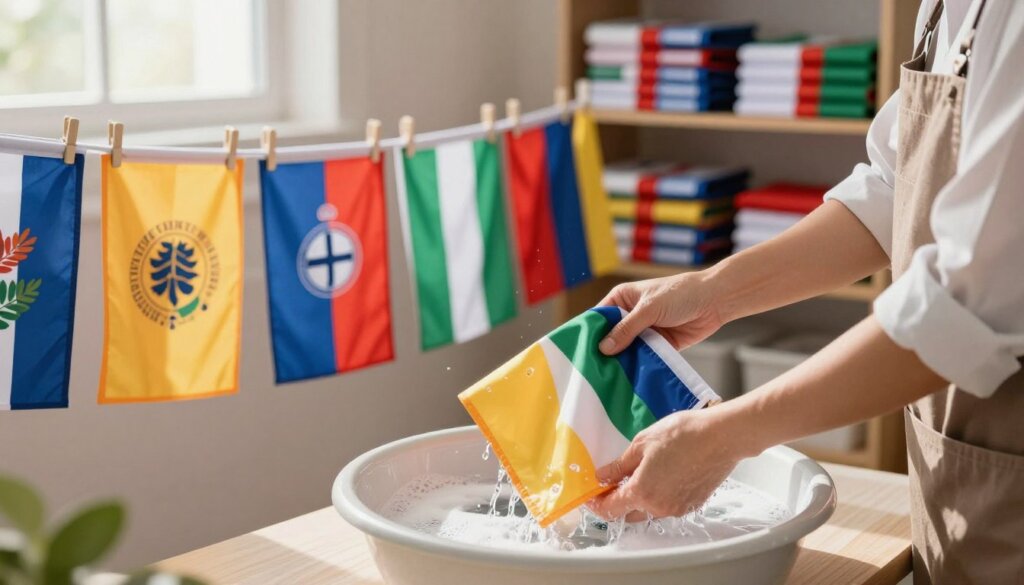
Hand Washing: Step by Step
Hand washing is safest for delicate or older flags. Here’s how to do it:
- Fill a tub with cool water and add a mild detergent.
- Gently agitate the flag in the water.
- Let it soak for about 15 minutes.
- Rinse thoroughly until the water runs clear.
- Never wring or twist the fabric to avoid damage.
Machine Washing: Tips and Tricks
If you prefer machine washing, here are some tips:
- Use a front-loading washer on a gentle cycle with cold water.
- Place the flag inside a mesh laundry bag for protection.
- Avoid washing with heavy items like jeans to prevent wear and tear.
Special Instructions for Delicate Flags
For flags made from delicate materials, hand washing is best. This method keeps the design safe and prevents damage.
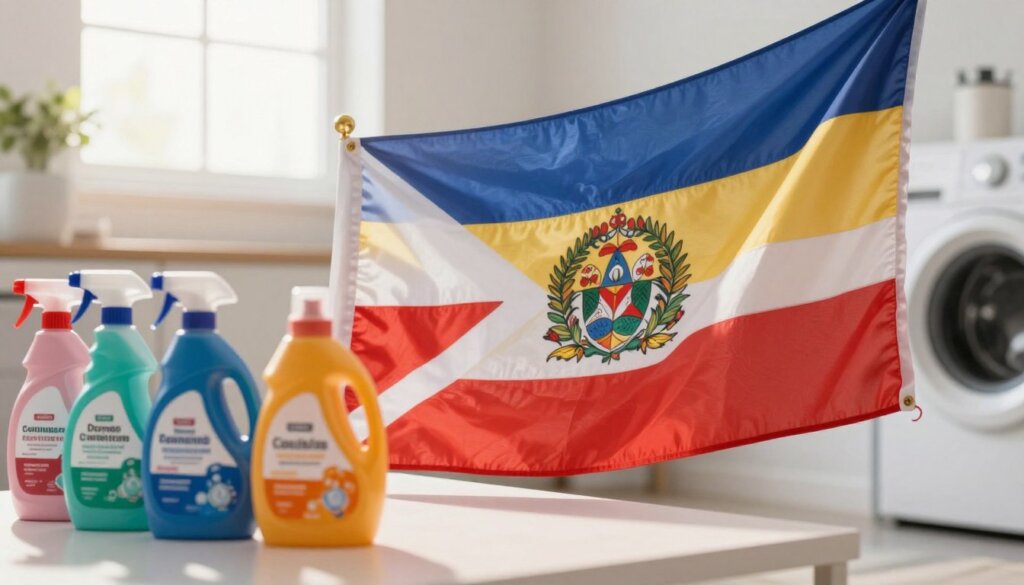
Recommended Detergents for Flag Washing
Choosing the right detergent is key to keeping your printed flags looking great. The right one keeps colors bright and fabric strong. We’ll look at eco-friendly options, why to avoid harsh chemicals, and suggest some brands.
Eco-Friendly Detergents
Eco-friendly detergents are a smart pick for flag washing. They’re soft on fabrics and kind to the planet. Look for biodegradable ones without harmful chemicals. These keep your flags in top shape while being eco-friendly.
Avoiding Harsh Chemicals
Stay away from harsh chemicals like bleach. They can fade colors and weaken fabric. Choose a mild, pH-neutral detergent instead. Make sure it’s safe for printed fabrics.
Recommended Brands to Consider
Here are some brands known for their gentle formulas:
| Brand | Type | Key Features |
|---|---|---|
| Seventh Generation Free & Clear | Liquid | Free from dyes and fragrances |
| Ecover Zero | Liquid | Biodegradable and eco-friendly |
| Biokleen | Liquid | Free from optical brighteners |
For tough stains, use a small amount of mild detergent first. But never use chlorine bleach. It can ruin your flag. If your flag has many colors, test a hidden spot with a damp cloth. This can save you from disappointment later.
Drying Techniques for Flags
To keep your flags looking great, learning how to dry them right is key. Proper drying is a vital karogu kopšanas tehnika that many miss. The drying method greatly impacts your flags’ look and life span.
Air Drying: Why It’s Best
Air drying is the top choice for flags. Place the flag flat on a clean towel or hang it over a clothesline. Make sure it’s not in direct sunlight to prevent fading.
Don’t wring or twist the flag. This can mess up its shape.
Using a Clothes Dryer: What to Avoid
If you must use a dryer, choose the lowest heat or air-fluff setting. Take the flag out while it’s a bit damp to avoid overheating. Never use high heat, as it can cause permanent wrinkles and harm synthetic fibers.
Ironing and Its Importance
After drying, a cool iron can remove wrinkles. Always use a pressing cloth between the iron and the flag. This protects the printed areas and keeps your flag looking sharp.
Stain Removal Tips for Flags
Dealing with stains on flags quickly makes cleaning easier. Flags face many elements, causing stains that need fast action. Knowing how to handle these stains helps keep your flags looking great.
Common Stains and Their Treatments
Common stains include bird droppings, mud, grass, and food spills. For organic stains, rinse with cold water right away. Use a bit of mild detergent on the spot, then rinse well.
For oil-based stains, like sunscreen, dish soap works well. Always test any cleaner on a hidden spot first. This ensures it won’t harm the flag’s color or fabric.
Quick Stain Rectification Methods
Quick action is essential. The sooner you treat a stain, the better. Keep a small cleaning kit with mild detergent and a soft brush ready. This way, you can clean stains as they happen.
Preventive Measures
To stop stains, spray your flag with a fabric protector like Scotchgard. But, test it first to avoid color changes. Regular cleaning also prevents dirt buildup, making future cleaning simpler.
Storing Flags Safely
To keep your flags looking great, it’s important to store them right. Proper karogu uzglabāšana helps your flags stay in top shape. The right place to store them is key to keeping their fabric and colors bright.
Choosing the Right Storage Space
Find a cool, dry, and dark spot for your flags. A closet or a special storage bin is perfect. But, avoid attics and basements because they can be too hot and humid.
Folding vs. Rolling: Best Practices
Folding your flags neatly is a good start. But rolling them around a cardboard tube is even better. This way, you avoid permanent creases and keep your flag looking sharp.
Avoiding Moisture and Pests
Don’t store your flag in a plastic bag, as it can get moldy. Use a breathable cotton bag or acid-free tissue paper instead. To keep pests away, add a cedar block or lavender sachet to your storage. These steps will help protect your flag’s fabric and colors, making it ready for the next time you use it.
How to Display Flags Properly
Displaying your flag correctly is key in apdrukātu karogu kopšana. It shows respect and keeps the flag in good shape. Here are some tips to make your flag look great indoors or outdoors.
Best Practices for Indoor Displays
Keep flags indoors away from direct sunlight. Sunlight can fade the colors. Also, avoid damp or heated areas to prevent damage.
Use a strong rod or dowel that supports the flag’s full width. This keeps the flag from sagging. If you have many flags, rotate them to keep them looking fresh.
Outdoor Display Considerations
For outdoor displays, choose a sturdy pole that can handle the weather. Make sure the flag can fly without rubbing against rough surfaces. Take down flags in bad weather to avoid damage.
If you display your flag at night, use proper lighting. It makes the flag more visible and shows respect.
Seasonal Display Tips
Change seasonal flags often, like those for holidays. This prevents sun damage. Switching flags with the seasons keeps your display looking good.
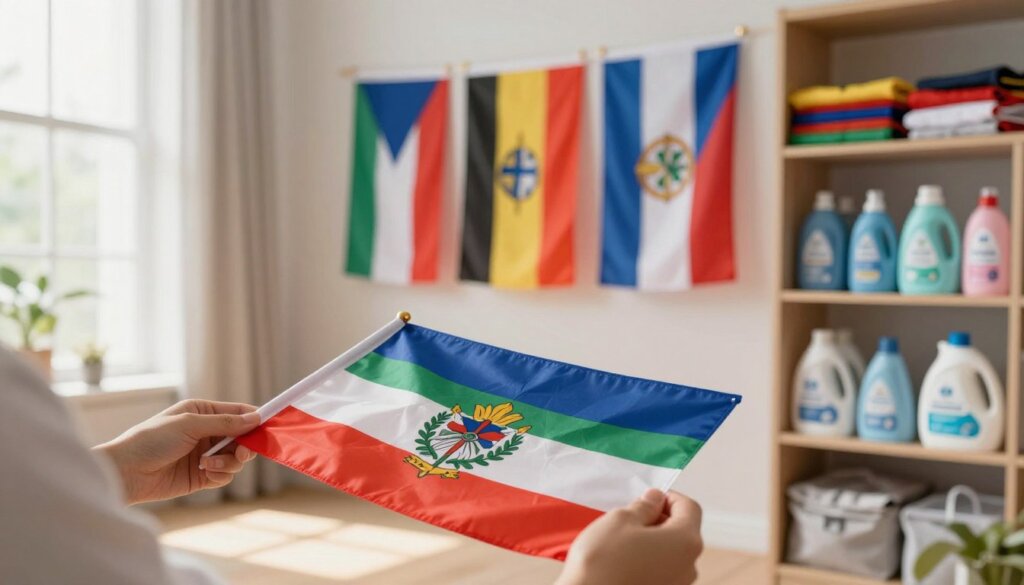
By following these display tips, you honor the flag and make it last longer. Taking good care of your flags ensures they remain a symbol of pride for years.
Regular Maintenance for Longevity
Regular upkeep of your flags not only preserves their appearance but also their meaning. It’s important to set a maintenance schedule for your flags. For outdoor flags, check them every month. Indoor flags should be inspected every three months. This helps you catch problems like fading or fraying early.
When you see small damages, fix them right away. Restitching a hem or patching a tiny hole can be done at home. Use a needle and thread that matches the flag’s colors. These small fixes can make a big difference in your flag’s life.
But sometimes, a flag needs to be replaced. If it’s faded, torn, or the print is peeling, it’s time for a new one. If the flag doesn’t look good from afar, it’s time to retire it. Many places offer flag retirement ceremonies, which is a respectful way to honor them.
By following these apdrukātu karogu kopšanas padomi, your flag collection will stay vibrant and meaningful for years.
Tips for Flags with Specific Designs
Different flags need special care to keep them looking good and lasting long. Each design has its own challenges. It needs special handling to last and be respected.
Checkered Flags: Specific Care
Checkered flags, common in racing, are made from strong polyester. Their black-and-white patterns can get dirty fast. So, it’s important to wash them often but gently.
Use a mild detergent to keep the fabric in good shape. Hand washing is best to avoid damage from machine agitation.
National Flags: Respectful Handling
National flags hold deep meaning and should be treated with great respect. Never let them touch the ground, as it’s seen as disrespectful in many places. When storing, follow local rules for folding and display.
It’s key to handle them carefully to keep their dignity and look.
Sports Team Flags: Considerations
Sports team flags have bright logos that can crack if folded wrong. To avoid damage, roll them instead of folding. Also, for flags with metallic or glitter details, hand wash them. Avoid ironing directly to keep the design safe.
Knowing these details helps each flag get the care it needs. This keeps its look and importance safe.
Understanding Flag Etiquette
Respecting flag etiquette is key to honoring our flags’ ideals and sacrifices. Flags are more than fabric; they symbolize our values and history. Displaying them with respect shows our gratitude for what they stand for.
Proper flag etiquette is vital for everyone, whether it’s a national or local flag. Knowing how to treat these symbols correctly builds community pride. Here are some important points to remember:
Displaying Flags with Respect
When showing a flag, follow certain rules. The U.S. Flag Code says flags should not be shown in bad weather unless they’re made for it. Always raise the flag quickly and lower it with ceremony. If a flag gets worn or torn, it should be respectfully disposed of, often through burning.
When to Take Down Flags
Knowing when to take down a flag is also key. Flags should be removed at sunset unless they’re lit up. In bad weather, take them down to avoid damage. These actions show respect for the flag and help it last longer.
Learning Local Customs
Flag etiquette can differ by region and culture. When showing flags from other countries or cultures, learn their customs. This respectful act honors their traditions and builds community goodwill.
Teaching kids about flag etiquette helps them feel proud and responsible. By understanding these symbols, we can build a more united and respectful community.
| Flag Etiquette Practice | Details | Importance |
|---|---|---|
| Display in Good Condition | Ensure flags are clean and not frayed. | Shows respect for the symbol. |
| Take Down at Night | Remove flags unless illuminated. | Maintains dignity of the flag. |
| Learn Local Customs | Understand traditions related to flags. | Promotes community respect. |
Custom Flags: Special Care Instructions
Caring for custom flags needs special attention. They often have unique artwork that needs extra apdrukātu karogu kopšana. The printing method affects how you care for your flag.
Dye-sublimated flags are more durable because the ink is embedded in the fibers. Screen-printed flags, on the other hand, have a surface layer that can crack if mishandled. Always wash custom flags inside out in cold water to protect the design.
Washing Custom-Printed Flags
When washing your custom flag, avoid fabric softeners. They can dull the print. Use a gentle detergent safe for delicate fabrics instead. This keeps the colors bright and the design intact.
Storing Custom Designs
For storage, roll the flag with the design facing outward. This prevents creasing and keeps details sharp. Avoid folding, as it can cause permanent creases.
Displaying Unique Patterns
Keep your custom flag out of direct sunlight to prevent fading. If it has detailed designs, frame it behind UV-protective glass for indoor display. This protects the design from dust and damage while showing it off.
“Proper care ensures your custom flag remains as stunning as the day you got it.”
| Care Aspect | Recommendation | Notes |
|---|---|---|
| Washing | Cold water, inside out | Avoid fabric softeners |
| Storing | Roll with design outward | Minimize creasing |
| Displaying | Keep out of direct sunlight | Consider UV-protective glass |
DIY Flag Repairs at Home
Don’t throw away a damaged flag; you can fix it easily. Many flags can be saved with simple steps. Learning basic karogu kopšanas tehnika can help you fix your flag and make it last longer.
For small tears, use a needle and thread that matches the flag’s color. A ladder stitch is good for seams, and a straight stitch works for straight rips. Make sure to work on a clean, flat surface for better results.
Simple Stitching Techniques
Keep your stitches small and even when stitching. This makes the repair strong and hidden. If you’re new to sewing, start with a scrap fabric to get better.
Patching Holes and Tears
For holes, cut a patch from similar fabric. Use fabric glue or stitch it on the back side. This keeps the front looking good and preserves the flag.
When to Seek Professional Help
But, if the damage is big—like large rips, shredded edges, or a faded print that’s peeling—get a pro. A professional seamstress or flag repair service can fix it right without harming the flag.
With a bit of practice, you can fix most small problems at home. Learning these skills can save your favorite flag from being thrown away.
| Repair Type | Recommended Technique | When to Seek Help |
|---|---|---|
| Small Tears | Ladder Stitch | N/A |
| Straight Rips | Straight Stitch | N/A |
| Holes | Fabric Patch | Large Holes |
| Shredded Edges | Stitching or Patching | Extensive Damage |
| Faded Prints | N/A | Professional Restoration |
Frequently Asked Questions about Flag Care
Wondering how to keep your flag looking great? You’re not alone! Many flag owners have similar questions about care and maintenance. Here are some common inquiries and their answers to help you.
What if My Flag Fades?
If your flag fades, it’s usually because of too much sun. To fight this, try rotating your flags or using a UV-protectant spray. Sadly, once a flag fades, there’s no way to fix it. Often, it’s best to retire a faded flag.
Can I Use Bleach on My Flag?
Never use bleach on a printed flag. It can ruin colors and weaken the fabric fast. For extra brightness, use oxygen-based cleaners like OxiClean. Always test a small area first to avoid damage.
How Often Should I Clean My Flag?
Outdoor flags should get a light wash every 2–3 months. Indoor flags can go longer without cleaning. But, if your flag gets dirty or stained, clean it right away to keep it looking good.
Creating a Flag Care Checklist
Creating a flag care checklist makes caring for your flags easy. It helps you remember all the important steps for keeping your flags in top shape. This includes care, seasonal maintenance, and how to display and store them.
Essential Steps for Care
To keep your flags looking great, follow these key steps:
- Inspect for Damage: Check your flags often for any wear or tear.
- Remove Hardware: Take off any hardware or accessories before washing.
- Wash Gently: Use a mild detergent and wash your flags carefully to avoid damage.
- Air Dry: Always air dry your flags to keep their shape and color.
- Store Properly: Pick a good storage method to protect your flags from moisture and pests.
Seasonal Maintenance Tips
Spring is a great time to deep-clean your flags and check for winter moisture damage. Fall is the best time to get your flags ready for indoor storage. Keeping up with these seasonal tasks will help your flags last longer.
Checklist for Display and Storage
To display and store your flags right, consider these tips:
- Choose the Right Pole or Hanger: Make sure it fits your flag’s design.
- Avoid Direct Sun: Keep your flags from fading by avoiding direct sunlight.
- Take Down During Storms: Remove flags in bad weather to prevent damage.
- Fold or Roll Correctly: Use the right techniques to avoid creases and damage.
- Use Breathable Storage Bags: This keeps your flags safe from moisture and pests.
Print this checklist and keep it with your flag supplies. It makes caring for your flags quick and easy. Using this checklist regularly will keep your flags looking their best for years to come.
Conclusion: Caring for Your Flags
Learning how to care for your flags is key to keeping them looking great. We’ve covered the best ways to wash, store, and display them. Each step helps your flags last longer, staying bright and meaningful symbols of pride.
Summarizing the Key Points
Every little thing counts, from the right washing method to how you store them. Always check your flags for stains and clean them quickly. By following these tips, your flags will stay in top condition, proudly showing your values and memories.
The Importance of Proper Flag Care
Flag care is more than just upkeep. It shows respect for the symbols and traditions they stand for. Flags share stories, represent communities, and connect us to our heritage. Taking good care of them honors those stories.
Encouraging Care as a Community Value
Getting your community involved in flag care can bring everyone together. Think about hosting events on flag maintenance or sharing tips on social media. By working together, we can keep our flags flying high, proudly showing our shared values and history.

