






Ever wondered why some booths at exhibitions catch your eye while others don’t? It’s often because they were well-prepared. All mistakes at exhibitions happen for one reason – lack of a plan. Without a clear plan, even great ideas can get lost in the event’s chaos.
Welcome to your ultimate guide for exhibition success! Getting ready for a trade show can seem daunting. But with a detailed booth and materials checklist, you’ll find it easy. This article will guide you through every step, from setting your goals to packing up after the event.
We’ll offer friendly, practical tips to help you avoid common mistakes. So, grab a coffee, and let’s get you ready to shine on the show floor!
Key Takeaways
- Planning is key for exhibition success.
- A well-structured checklist saves time and reduces stress.
- Defining your goals is the first step in preparation.
- Learn from common mistakes to improve your strategy.
- Stay organized for a smooth event experience.
Understanding the Purpose of Your Exhibit
Knowing what you want from your exhibit is key to a good trade show plan. Before booking a booth, make sure you know your goals. Are you introducing a new product, looking for leads, or boosting your brand? Your goals will guide all your decisions.
Then, think about who you want to meet. What problems do they have and what are they interested in? Knowing your audience helps your booth connect with them. For example, if you’re targeting tech fans, a VR experience could show off your product in a cool way.
Define Your Goals
Clear goals are the base of your trade show plan. Think about these objectives:
- Launch a new product
- Generate quality leads
- Increase brand visibility
- Network with industry professionals
Identify Your Target Audience
Knowing your audience is key. Ask yourself:
- Who are they?
- What challenges do they face?
- What solutions can you provide?
By matching your exhibit to your audience’s needs, you create a memorable experience. This not only boosts engagement but also makes your trade show investment worth it.
| Goal | Target Audience | Interactive Element |
|---|---|---|
| Launch New Product | Tech Enthuasiasts | VR Demonstration |
| Generate Leads | Business Professionals | Live Q&A Sessions |
| Increase Brand Visibility | General Public | Photo Opportunities |
By defining your goals and knowing your audience, your exhibit will attract and engage visitors. This strategic planning is essential for a successful trade show.
Planning Your Exhibit Space
Choosing the right spot for your exhibit can really make your event better. It’s important to pick the best location and figure out how much space you need. Let’s look at how to make smart choices for your exhibit.
Choosing the Right Location
Location is key in exhibitions. A booth near busy spots like entrances or food courts can draw more people. Think about these things when picking your spot:
- Visibility: Make sure your booth is easy to see from all sides.
- Accessibility: Pick a place that’s simple for visitors to get to.
- Proximity to Competitors: Being near rivals can help, but don’t get too crowded.
Assessing Space Requirements
After you’ve picked your spot, measure your space carefully. This makes sure you can fit everything without being too cramped. For example, a VR station needs at least a 3×3 meter area to work well. Also, think about:
- Storage: Make sure you have enough room for your stuff and equipment.
- Seating: Set up a cozy area for visitors to check out what you offer.
- Flow Path: Plan your layout so people can move easily and avoid getting stuck.
A well-thought-out space makes visitors happy and avoids last-minute problems. By thinking about these things, you can make an exhibit that’s both welcoming and effective.
| Space Requirement | Purpose | Recommended Size |
|---|---|---|
| VR Station | Interactive Experience | 3m x 3m |
| Storage Area | Material Management | Varies |
| Seating Area | Visitor Engagement | 2m x 2m |
Designing Your Booth Layout
Creating an inviting booth layout is key to drawing in visitors and showing off your brand. Your booth design is like a silent salesperson, making a lasting first impression. To make this happen, add eye-catching visuals and elements that match today’s design trends.
Using fluid gradients and bold colors can really make your booth pop. These elements grab attention and leave a lasting impression on visitors. But, remember, beauty isn’t enough. The layout must also make it easy for people to move around.
Key Elements of Effective Design
When designing your booth, focus on a few key elements:
- Visual Appeal: Use vibrant colors and modern graphics to stand out.
- Central Product Placement: Place your main product or demo station in the center to draw visitors in.
- Clear Signage: Make sure your branding and messages are easy to read from afar.
By using these strategies, you create an engaging space that encourages people to interact. The goal is to draw people in, not push them away.
Flow and Accessibility Considerations
Flow and accessibility are key in booth design. Make sure paths are wide and clear, allowing for easy movement. Consider the following:
- Pathway Width: Aim for at least three feet of space for visitors to move comfortably.
- Material Placement: Keep important materials at reachable heights for all attendees.
- Avoid Clutter: A clean, organized space is more inviting than a cramped, disorganized one.
Sketch your layout early and test the flow with your team to spot any issues before the event. A friendly, open design will naturally attract visitors, making your booth a must-see spot.
Important Materials to Prepare
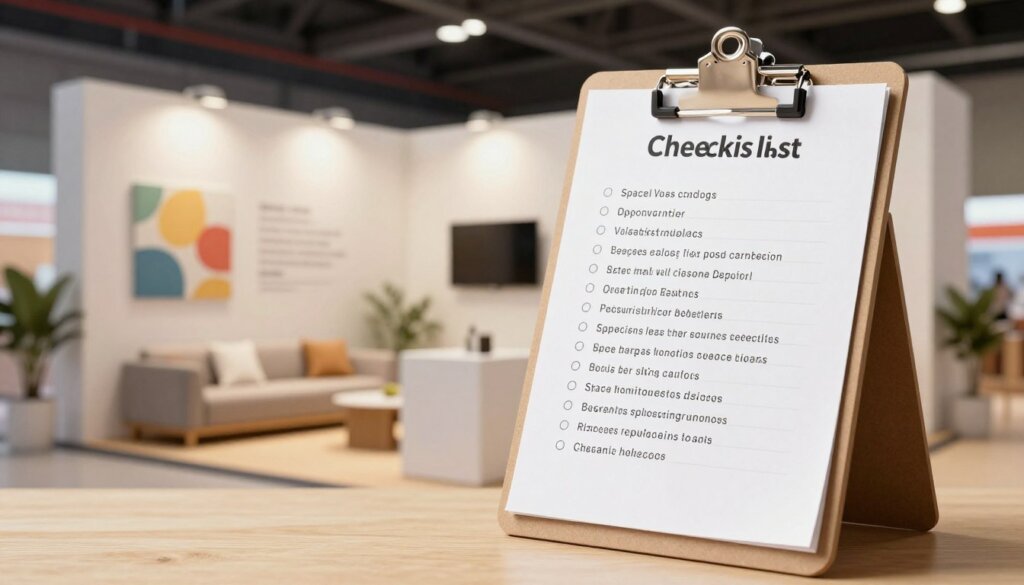
Getting the right materials is key to a great exhibit. These items are what visitors remember after they leave. A good exhibit materials checklist helps you make sure you have everything.
Banners and Signage
Your banners and signs should stand out and be easy to read. They are the first thing people see at your booth. So, they should show off your brand well. Use bright colors and clear fonts to catch eyes. Think about including:
- Large banners with your logo and tagline
- Directional signs to guide visitors to your booth
- Informational displays that highlight key products or services
Printed Brochures and Flyers
Printed brochures and flyers are useful, but think of new ways to engage visitors. Why not give out AR-enhanced cards? A card that shows a product demo when scanned with a phone is amazing. This can replace traditional brochures for a lasting impression. Make sure to include:
- Brochures detailing your products and services
- Flyers with special offers or event-specific promotions
- AR greeting cards for an interactive experience
Product Samples and Demonstrations
Hands-on experience is the best way to engage visitors. Offer product samples or live demos to boost interest. Make sure to have:
- Sample kits for visitors to try
- Live demonstrations scheduled throughout the event
- Informative staff to answer questions and guide attendees
Make a detailed checklist of all items, from banner stands to sample kits. Check them off as you pack. This ensures you don’t forget anything important on the event day.
Essential Equipment and Tools
Having the right equipment can make your exhibit stand out. To create an engaging booth, consider the essential tools and materials. Each element is key in attracting visitors and starting conversations.
Display Tables and Furniture
Begin with sturdy, branded display tables to hold your materials. Comfortable seating is also key for talking with clients. Make sure your furniture looks good and fits your brand.
A well-organized booth invites visitors to stay and learn more. This helps them connect with what you offer.
Technology Needs: Screens and Devices
Technology is a big part of exhibitions. Large screens can show presentations or videos, grabbing attention. Tablets are great for collecting visitor info easily.
Think about using immersive tech like VR headsets or 360° photo spinners. These tools can make your booth unforgettable and boost visitor interaction.
Lighting and Electric Requirements
Lighting is very important. Spotlights can highlight your products and make your booth welcoming. Plan your electric needs early, as venues often need advance orders for extra outlets.
Having a detailed list of your lighting and electric needs helps avoid last-minute issues. This ensures your booth is ready to go when the doors open.
Staffing Your Exhibit
A well-prepared team is key to making a lasting impression at your exhibit. Your booth staff are your brand’s face. It’s important to pick team members who are knowledgeable, friendly, and approachable. A warm smile can attract more visitors than the flashiest display.
When selecting your team, consider the following:
- Knowledgeable Individuals: Ensure they understand your products and services thoroughly.
- Approachable Attitude: Look for team members who can engage visitors easily.
- Experience in Exhibitions: Prior experience can be a significant advantage.
Once you have your team, training them is vital. They should know your products well, understand the booth’s goals, and be ready for common questions. Here are some training tips:
- Product Knowledge: Conduct sessions to educate them about your offerings.
- Role-Playing Scenarios: Simulate common interactions to boost confidence.
- Communication Skills: Teach them how to engage effectively with visitors.
Assigning clear roles within the team can enhance efficiency. Consider these roles:
- Greeter: The first point of contact who welcomes visitors.
- Product Demonstrator: Showcases products and answers technical questions.
- Lead Collector: Gathers contact information for follow-up.
“A well-prepared, enthusiastic team makes visitors feel valued and keeps them engaged.”
In conclusion, investing time in staffing your exhibit effectively is a key step in preparing for a trade show. With the right team, your exhibit can create a memorable experience for all visitors.
Marketing Your Presence
Getting people excited for your exhibit starts early. Good marketing can fill your booth with life. By telling people you’re coming weeks ahead, you draw in curious visitors.
Announcing Your Participation
Don’t wait to share the news. Use email newsletters, social media, and your website to say you’re coming. Share a sneak peek of what you’ll show. It could be a new product or a cool VR experience.
Engaging Your Audience Before the Event
Get people to book meetings or come see your booth. This pre-event buzz is key. It makes sure you have a steady flow of interested visitors. Use a friendly tone to make them feel invited.
| Marketing Strategy | Benefits | Tools |
|---|---|---|
| Email Newsletters | Direct communication with visitors | Mailchimp, Constant Contact |
| Social Media Posts | Reach more people and get them involved | Facebook, Twitter, Instagram |
| Website Announcements | One place for all the info | Your website |
Logistics and Setup
Preparing for an exhibition involves meticulous planning, especialy when it comes to logistics and setup. The behind-the-scenes work can truly make or break your exhibition experience. It’s essential to plan how you’ll transport everything—from banners to fragile tech gear.
Start by using sturdy cases for your materials and clearly label all boxes. This will save you time and reduce stress when you arrive at the venue. If you’re renting equipment, such as VR headsets or a 360° spinner, confirm delivery times and setup support in advance.
Once on-site, allocate enough time for assembly. Rushing through setup can lead to mistakes that might affect your exhibit’s performance. Ensure that you test all technology before the show floor opens. This includes checking screens, internet connections, and interactive elements.
A smooth setup means you can focus on welcoming visitors with confidence, instead of troubleshooting last-minute glitches. By taking these steps, you’ll create a professional atmosphere that attracts attendees and enhances their experience.
Preparing for Show Days
As the big day approaches, it’s time to get everything ready. Good trade show preparation means a smooth event and a team ready to meet visitors.
Start by making a detailed schedule for your staff. It’s important to balance their energy levels. Make sure to switch team members to give them breaks. A tired or hungry team can’t connect well with visitors, which hurts your success.
Scheduling Staff Shifts
Plan your staff’s shifts for when the event is busiest. This ensures you have enough people when it matters most. Also, make sure everyone knows their schedule so they can plan their day.
Last-Minute Checks and Adjustments
Do a final check of your booth before it opens. Make sure brochures are ready, demos work, and tech is set up. Also, keep charging cables hidden and make sure everything looks good from the visitor’s side.
It’s smart to have an emergency kit ready. Include things like tape, markers, and extra batteries. These small steps will keep your booth looking great all day. A bit of prep now saves a lot of stress later!
| Task | Responsibility | Status |
|---|---|---|
| Staff Schedule Created | Event Manager | Completed |
| Final Booth Walkthrough | All Staff | Pending |
| Emergency Kit Prepared | Logistics Coordinator | In Progress |
Techniques for Engaging Visitors
Engaging visitors at your exhibit needs new, exciting methods. The old days of just showing things are over. Today, people want to get involved and have fun. By adding interactive parts, you can make your booth a hit and connect with your audience.
Creating Interactive Experiences
One great way to grab your audience’s attention is with fun activities. Here are some cool ideas:
- VR Zones: Let visitors see your products in a virtual world.
- AR Balloons: These fun elements are great for kids and grab everyone’s attention.
- AI Photo Booths: Take pictures with custom frames that people will love to share.
- 360° Spinners: Make videos that visitors will want to post online.
- Gesture-Based Games: Use Kinect for fun, interactive games.
These activities not only attract people but also get them to share their info. For example, you can send them their photos or enter them in a contest. This way, you get their contact info while they’re having fun.
Collecting Visitor Information
While visitors are enjoying themselves, it’s important to collect their info. Here are some ways to do it:
- Sign-Up Sheets: Put them near the fun stations for easy signing.
- Digital Forms: Use tablets or kiosks to make it quick and easy.
- Incentives: Give discounts or free stuff for their contact info.
By using these methods, your booth will be the highlight of the show. You’ll also get a lot of good leads. The key is to make your booth welcoming and engaging.
Follow-Up Strategies Post-Event
After the event, it’s vital to keep working on your follow-up plans. The show may end, but your job is just starting. Send personalized emails to your leads within 48 hours.
Make sure to mention your conversation to help them remember. Maybe talk about the VR demo they enjoyed.
It’s also important to ask for feedback. A short survey can tell you what worked and what didn’t. Use this info to make your next event even better.
Building strong connections is key. Don’t just send sales emails. Share valuable content that helps and builds trust. A friendly approach can turn visitors into loyal customers.
Evaluating Success Through Feedback
Feedback is a powerful tool for growth. Here’s how to gather insights:
| Feedback Method | Description | Benefits |
|---|---|---|
| Email Surveys | Send brief surveys to collect opinions on the event experience. | Quick insights and easy to analyze. |
| Phone Calls | Reach out to key leads for a more personal touch. | Builds stronger relationships. |
| Social Media Polls | Use your social media platforms to gather informal feedback. | Engages your audience and increases visibility. |
Nurturing Leads and Connections
After getting feedback, focus on nurturing those leads. Share content that interests them. This could be blog posts, case studies, or special offers.
Your goal is to keep the conversation going. Show them the value you provide.
Remember, the real fortune is in the follow-up. Your post-event strategies can greatly impact your future success. By using feedback and nurturing connections, you can turn your trade show efforts into lasting relationships.
Budgeting for Your Exhibit
Effective budgeting is key to a successful exhibit. Accurate cost estimates help ensure your exhibit meets its goals without overspending. Start by making a list of all possible expenses. This includes booth rental, design, materials, equipment, travel, and staffing.
Estimating Costs Accurately
When planning your budget, consider different levels of interactive technology. A basic photo booth is a cost-effective option. A mid-range budget might include a photo booth and a VR zone. With a premium budget, you can add more tech solutions and full branding.
| Budget Tier | Technology Options | Estimated Cost |
|---|---|---|
| Economical | Single Photo Booth | $1,000 – $2,000 |
| Mid-Range | Photo Booth + VR Zone | $3,000 – $5,000 |
| Premium | Multiple Tech Integrations | $6,000+ |
Don’t forget to include a contingency fund for unexpected costs. This fund can help you handle any surprises during planning.
Tips for Sticking to Your Budget
To stay on budget, focus on what’s essential. Negotiate with vendors early to get better deals. A clear budget lets you enjoy the event without financial stress.
“A budget is telling your money where to go instead of wondering where it went.”
With smart planning and budgeting, your exhibit can be both impressive and affordable.
Evaluating Your Exhibit Performance
Understanding how your exhibit did is key to getting better next time. It’s not just about counting business cards. Look at specific numbers that show how well your exhibit did.
Key Metrics to Analyze
When checking your exhibit’s performance, track these important metrics:
| Metric | Description | Importance |
|---|---|---|
| Leads Generated | The number of people who showed interest. | Shows how well you reached out. |
| Sales Closed | The deals made during or after the event. | Measures the money made. |
| Booth Traffic | How many people visited your booth. | Shows how interesting your display was. |
| Social Media Mentions | How much your exhibit was talked about online. | Indicates your brand’s visibility and interaction. |
After collecting these numbers, compare them to your goals. This will help you see what worked and what didn’t.
Lessons Learned for Future Events
After checking your exhibit, have a team meeting to discuss. Talk about what went well and what didn’t. Write down these lessons while they’re fresh.
Use these insights to improve your display stand checklist for future shows. Getting better with each event is the key to success. By learning from each show, you can make your next event even better.
Leveraging Social Media During the Event
Social media is a powerful tool that can enhance your event experience. By using platforms like Instagram, Twitter, and Facebook, you can create real-time engagement with your audience. This keeps your current visitors informed and attracts new ones who might be nearby.
Sharing live updates from your booth is key. Post photos of your setup, show live demonstrations, and capture the excitement of happy visitors. This makes your booth a dynamic space, generating buzz around your exhibit.
Real-Time Updates and Engagement
Engaging your audience through real-time updates is vital. Use stories and posts to highlight key moments during the event. If you have interactive experiences, like a 360° video or an AI photo booth, promote them on your social media channels. These experiences are highly shareable and can attract a wider audience.
Encourage attendees to share their experiences by using a unique event hashtag. You can even offer small incentives, like a prize draw, to motivate them to post. This increases your reach and fosters a sense of community among visitors.
Encouraging Visitor Interaction
Creating an interactive environment is vital for engagement. Ask visitors to tag your brand in their posts and share their own content. This user-generated content can be reposted on your social media, showing real experiences from your booth.
Engaging with comments and messages promptly is essential. Responding to inquiries or thanking visitors for their posts creates a friendly atmosphere. This keeps the conversation going, even after the event ends.
| Social Media Strategy | Action Steps | Expected Outcomes |
|---|---|---|
| Live Updates | Post photos and videos of your booth and activities | Increased engagement and visibility |
| Event Hashtag | Encourage visitors to use a specific hashtag | Greater reach and community building |
| User-Generated Content | Repost visitor content on your profile | Authentic promotion and enhanced credibility |
Tips for a Stress-Free Exhibition Experience
Exhibitions can be demanding, but they don’t have to be overwhelming. The key to a successful event is in your organization. Use your stendu un materiālu checklist well and start preparing early. This proactive approach will help reduce stress.
On the day of the event, stay hydrated and take short breaks. A positive mindset can greatly improve your experience. Share tasks with your team. This way, you won’t feel overwhelmed by managing everything alone.
If challenges come up—and they often do—take a moment to breathe and adapt with a smile. Visitors are drawn to calm and confident energy. With good planning and a flexible attitude, you can smoothly navigate the exhibition and enjoy the process.
By following these tips, you’re on your way to a successful show. Focus on what you can control, and let go of the rest. Here’s to making your exhibition experience both enjoyable and productive!

