


Ever thought about how a simple flag can show safety and brand messages at the beach? Beach flags are more than just bright colors and shapes. They are key in communication and marketing.
Walking by the shore or at a promotional event, you might see different flags waving. From lifeguard safety flags to eye-catching teardrop banners for marketing, each has its own role. Knowing about these flags helps in making things more visible or safe.
In this guide, we’ll look at how these banners share important info and last through tough weather. By the end, you’ll know how to pick the best flag for your needs. This will make your beach time fun and safe.
Key Takeaways
- Beach flags serve both safety and marketing purposes.
- Different shapes and types of flags convey specific messages.
- Understanding flags enhances beach safety and brand visibility.
- Flags can withstand harsh coastal conditions.
- Choosing the right flag is key for effective communication.
Introduction to Beach Flags
Beach flags are colorful and play a big role in keeping beaches safe and promoting activities. They are more than just decorations; they help communicate important messages. Knowing about beach flags is key for lifeguards and businesses.
What Are Beach Flags?
Beach flags, or pludmales karogi, are used on beaches for many purposes. They can show safety info or help promote events and businesses. Unlike fixed signs, beach flags are easy to move, making them great for outdoor use.
Importance of Beach Flags
Beach flags are very important. For lifeguards, they are a main way to signal water safety. A simple flag can tell if it’s safe to swim or if there are dangers.
For businesses, beach flags are a powerful marketing tool. They are made to catch the eye at outdoor events and stores. As one expert said,
“Beach flags are the silent salespeople of the seaside.”
In short, beach flags are vital for safety and marketing. They make the beach better for everyone, keeping it safe and fun.
Types of Beach Flags
Beach flags are important for safety and fun at the beach. They tell us important things like where to swim and what to watch out for. There are four main types: lifeguard flags, warning flags, informational flags, and event flags.
Lifeguard Flags
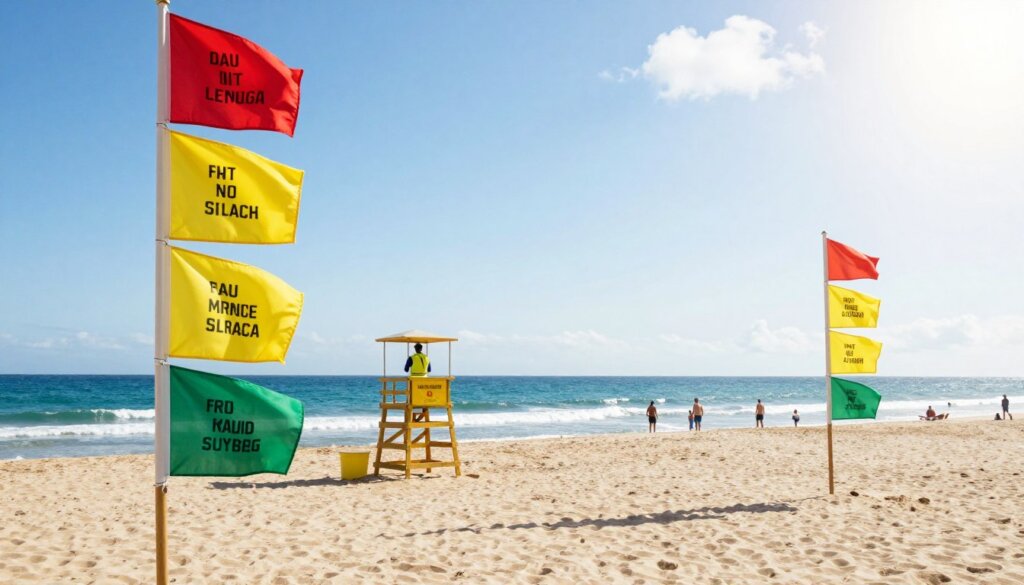
Lifeguard flags keep us safe. They show where it’s okay to swim and where it’s not. Lifeguards use colors to send messages fast. A red flag means danger, while a green flag means it’s safe to swim.
Warning Flags
Warning flags alert us to dangers. They tell us about things like rip currents and where to surf. Knowing about these flags helps us stay safe.
Informational Flags
Informational flags share more than safety info. They tell us about accessibility, facilities, and weather. For example, a flag might say the beach is wheelchair friendly or warn us about weather.
Event Flags
Event flags draw attention to beach activities. They come in many designs and can be customized. They help make events like surfing competitions or beach festivals more exciting.
Lifeguard Flags: A Closer Look
Lifeguard flags are key for beach safety. They help communicate to swimmers and beachgoers. Knowing their colors, shapes, and where to find them boosts beach safety.
Colors and Their Meanings
The colors of lifeguard flags tell us about the water. Here are the main colors:
- Red Flag: This flag warns of high hazards or no swimming. It’s a must-heed warning.
- Yellow Flag: A yellow flag means caution. It warns of dangerous conditions, so be careful.
- Green Flag: A green flag means it’s safe to swim. Enjoy the water but stay alert.
Each color is vital for beach safety. Remember, “A flag is worth a thousand words.”
Standard Shapes
Lifeguard flags are big rectangles for better visibility. Their shape helps everyone spot them, even in bad weather. The size and shape are set to keep consistency at all beaches.
Some beaches use triangular or pennant flags for special events or warnings. But, the rectangular shape is the most common.
Placement Guidelines
Where lifeguard flags are placed is key for clear communication. Lifeguards follow rules to place flags correctly:
- Flags should be at the water’s edge for clear visibility.
- They must be high enough to see over waves.
- Flags should be placed to create a clear view for beachgoers, helping them quickly see the water conditions.
By following these rules, lifeguards can effectively tell the public about swimming conditions. This helps keep the beach safe.
Warning Flags: Safety First
Beach safety is shown by colorful flags. Let’s look at what these flags mean. Knowing them is key for a safe and fun beach day.
Red Flags: What They Indicate
A solid red flag warns of serious dangers. It means strong rip currents, high surf, or dangerous marine life like jellyfish. Seeing a red flag means you should stay out of the water. This is for your safety and others.
Yellow Flags: Caution Signals
A yellow flag means caution is needed. Conditions are moderate, so swimmers should be careful. It’s best to stay near lifeguard stations and watch for changes. Always keep an eye on the water and listen to lifeguards.
Green Flags: Safe Swimming Conditions
A green flag is good news. It means calm waters and safe swimming. This flag lets beachgoers enjoy the ocean more. But, always stay alert and follow posted rules.
Informational Flags: Beyond Safety
Beach flags do more than just show if it’s safe to swim. They share important info that makes the beach better for everyone. This part talks about two key types: beach accessibility flags and weather flags.
Beach Accessibility Flags
These flags help make sure everyone can have fun at the beach. They point out special features like:
- Wheelchair-accessible paths: Paths that make it easy for people with mobility issues to explore the beach.
- Reserved areas: Special spots for those who need a little extra help or comfort.
- Sensory-friendly zones: Quiet areas that help people with sensory sensitivities relax.
By using these flags, beaches become places where everyone can enjoy the beach together.
Weather Condition Flags
Weather flags are key for keeping beach visitors safe and informed. They warn about different weather alerts, like:
- Windsurfing conditions: Signs that show when it’s the best time for windsurfing.
- UV index warnings: Alerts that tell you when the sun is too strong, so you can stay safe.
- Air quality alerts: Messages about the air quality, helping you decide if it’s a good day to be outside.
With these flags, beaches become better places for everyone. They are safer, more welcoming, and full of useful info.
| Flag Type | Purpose | Examples |
|---|---|---|
| Beach Accessibility Flags | Indicate accessible features | Wheelchair paths, sensory zones |
| Weather Condition Flags | Alert about weather conditions | UV warnings, air quality alerts |
Event Flags: Promoting Fun
Event flags are a great way to grab attention for your brand or event. They’re not just useful; they also make any event more fun. Their bright designs are key in today’s marketing.
Events come in many forms, and flags can help with all of them. From food festivals to sports games, flags add excitement and visibility.
Types of Events Using Flags
Flags are perfect for many events, such as:
- Food Festivals
- Car Dealership Sales
- Grand Openings
- Sporting Events
- Concerts and Music Festivals
Flags do more than just look good. They share important info and add to the fun. They’re a must-have for any event.
Customization Options
What makes event flags special is how you can customize them. With pludmales karogu dizains, you can make flags that really show off your brand. Full-color printing means your graphics are bright and clear.
You can pick the flag’s shape and base style. This way, your brand’s logo and message will really stick in people’s minds. Here’s a quick look at what you can customize:
| Customization Feature | Description | Benefits |
|---|---|---|
| Flag Shape | Choose from traditional, teardrop, or feather shapes. | Unique shapes stand out in a crowd. |
| Base Style | Options include ground spikes, cross bases, or water bags. | Stability in various weather conditions. |
| Graphic Design | Full-color, edge-to-edge sublimation printing. | Vibrant visuals that attract attention. |
Custom event flags make your brand pop and leave a lasting impression. Their bright designs and strategic placement make them a key tool for any promotion.
The Shape of Beach Flags
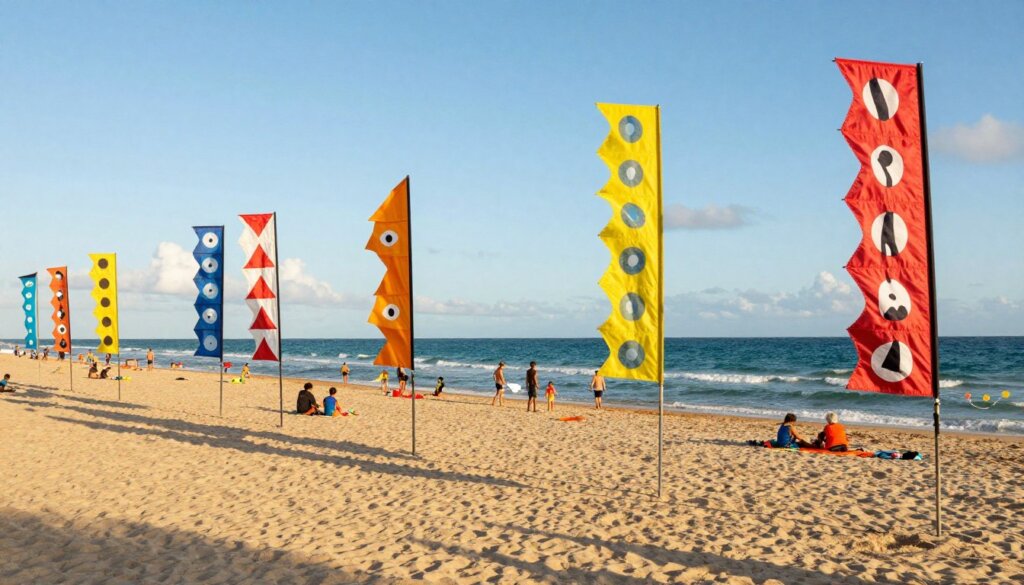
Beach flags come in many shapes, each for a specific use and visibility. The shape of a flag greatly affects how it moves and how visible it is. Let’s look at the main types of beach flags and what makes them special.
Traditional Rectangular Flags
Rectangular flags are the most common at beaches. Their simple design makes them easy to spot and understand. Lifeguards use these flags to share important safety info.
The size and bright colors of these flags make them stand out. They look great against the beach’s natural scenery.
Pennant Shape Flags
Pennant flags have a tapering shape, making them look dynamic and lively in the wind. This shape grabs attention and is also useful. The movement of pennant flags draws eyes, making them great for events and promotions.
Their bright colors also help them pop out, even in busy beach areas.
Vertical and Horizontal Variants
Vertical flags, like teardrop shapes, and horizontal flags, like feather shapes, are popular for ads. These flags stay tight, making them readable without wind. They’re perfect for drawing eyes to certain spots or events on the beach.
In conclusion, knowing about the different pludmales vairakas karoga formas is key for visibility and impact. Each shape has its own role, whether for safety, info, or promotion. Pick the right flag shape to make sure your message gets across.
Materials Used in Beach Flags
The success of beach flags depends a lot on their fabric. Knowing about pludmales karogu materiāli is key. Polyester is the top choice because it’s light and catches the wind well.
Polyester comes in two main types: standard and knitted. Standard polyester weighs about 110 g/m² and lasts about six months. Knitted polyester is stronger and lasts longer, making it better for longer use.
Common Fabrics
Let’s look at the fabrics used in beach flags:
| Fabric Type | Weight (g/m²) | Durability | Best Use |
|---|---|---|---|
| Standard Polyester | 110 | 6 months | Short-term events |
| Knitted Polyester | 200 | 12 months+ | Long-term use |
| Heavyweight Polyester | 250 | 18 months+ | High wind areas |
Benefits of Using Durable Materials
Polyester works great with dye-sublimation printing. This makes the graphics last without fading or peeling. This is key for beach flags, which face a lot of sun, salt, and wind.
Choosing top-notch pludmales karogu audumi means your flags will stay bright and work well for a long time. Good materials make your flags look better and work better too.
The Mechanics of Beach Flag Setup
Setting up beach flags might seem easy, but there are important steps to follow. These steps help your flags stand tall and look great. This guide will cover how to set up your flags, keep them visible, and maintain them for a long time.
Basic Setup Instructions
First, collect all the parts: the flag, pole, base, and any extras. Start by putting together the shock-corded fiberglass pole sections. They fit together easily for quick setup. Then, slide the flag into the top sleeve of the pole.
Next, set up the base. Use a ground stake or cross base on sand for stability. On grass, make sure the base is securely anchored to handle wind and movement.
Best Practices for Visibility
Visibility is key for beach flags. Point the flag towards where people are walking to make it more visible. Use bright colors and clear symbols to quickly share messages. Place the flag where it’s easy to see from far away, without being blocked by other things.
Maintenance Tips
To keep your beach flag looking good, follow these tips:
- Wash your flag in cool water on a gentle cycle, between 30-40 °C.
- Let your flag air-dry in the shade to avoid damage.
- Check the flag often for wear and tear. Replace it when needed to keep it safe.
Beach Flag Regulations
Before you set up your beach flags, it’s key to know the local rules. Each beach has its own rules for flags. This part talks about the key points of flag regulations, like local laws and safety rules. Knowing these rules helps your flags work right without any problems.
Local Laws and Guidelines
Local laws on beach flags can differ a lot. Some beaches limit flag size, type, and color to keep things neat. Always check with local authorities before putting up flags. Beaches have specific rules for what’s okay.
Understanding these rules makes sure your flags follow local standards.
Safety Compliance
Safety is a big deal. Official warning flags must follow certain colors and shapes. Using the wrong flag can cause confusion. To stay safe, make sure your flags meet local lifeguard standards.
Here’s a quick reference table summarizing common regulations:
| Beach Type | Flag Size Restrictions | Allowed Colors | Authority Contact |
|---|---|---|---|
| Public Beaches | Max 3×5 ft | Standard colors only | Local Lifeguard Station |
| Private Beaches | No restrictions | Custom allowed | Property Owner |
| Event Beaches | Max 4×6 ft | Event-specific colors | Event Organizer |
In conclusion, knowing the rules for beach flags is vital for safety and following the law. Always check local laws and guidelines before displaying any flags. This ensures a safe and fun beach experience for all.
Cultural Variations of Beach Flags
Beach flags tell stories beyond safety; they reflect cultural practices worldwide. Each country has its unique approach to using beach flags. These variations can reveal much about local customs and values.
How Different Countries Use Flags
In the United States, a red flag usually means danger, warning swimmers to stay out. But in Australia, the same flag might signal strong currents. This shows how important it is to know local flag meanings.
Countries also use flags to communicate specific messages. For example, a purple flag in the U.S. warns of marine pests. Other nations might use different symbols for similar warnings. These differences highlight the need for beachgoers to learn about local flag systems.
Symbolism in Beach Flags Abroad
Beyond safety, beach flags often carry cultural symbols and colors. In some cultures, certain colors have significant meanings. For instance, a flag with traditional patterns might celebrate local heritage or festivals.
Understanding these cultural variations not only enhances safety but also deepens appreciation for diverse coastal interactions. As beach lovers travel, recognizing these symbols can make their experiences more meaningful.
Technology in Beach Flags
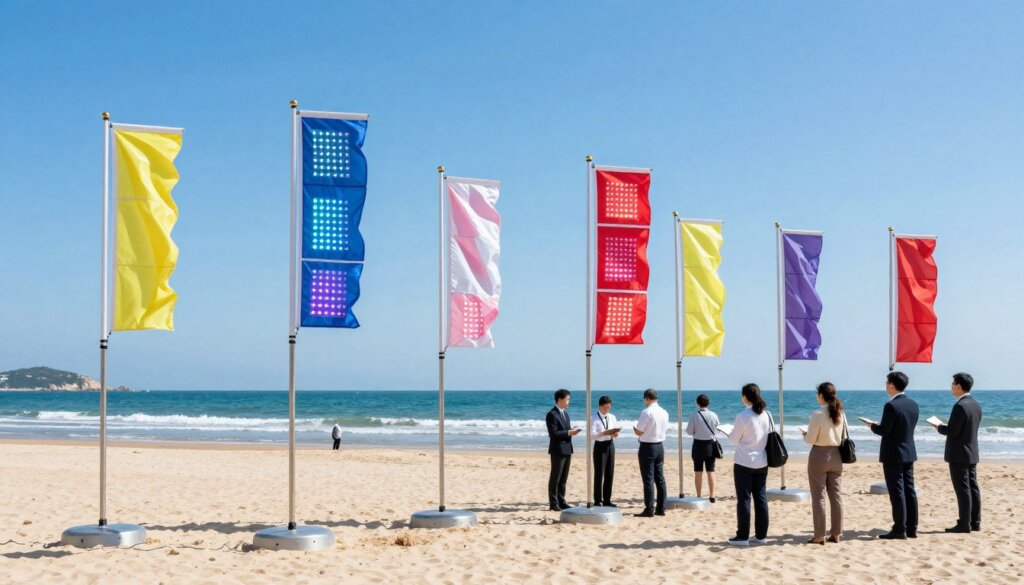
Technology is changing how we talk at events with beach flags. LEDs in flag designs are a big step forward. They make flags more visible and help brands stand out.
Picture a beach flag that lights up. It’s perfect for evening events or dim places. The colors pop, and your brand is seen clearly, day or night.
Incorporating LEDs
LEDs fix the problem of flags being hard to see. A bright flag grabs attention and works well as an ad. It makes sure your message is clear and your brand is noticed.
As the world gets more digital, adding tech to beach flags is key. Mixing old flag styles with new LED lights makes for powerful ads.
“LED advertising stands out in crowded spaces, making your message impossible to ignore.”
In short, LED beach flags are more than a trend. They’re a big change. They make flags more visible and engaging, changing how brands reach people.
Tips for Choosing the Right Beach Flag
Choosing the perfect beach flag is important. It must be safe and visible. Here are some tips to help you pick the right one.
Factors to Consider
Think about these when picking a beach flag:
- Location: Where will you use the flag? Sandy beaches and concrete sidewalks need different flags.
- Wind Conditions: Check the wind in your area. Your flag should stay strong in different weather.
- Purpose: What do you want the flag for? Safety, ads, or info? This helps choose the right one.
Budgeting for Beach Flags
Knowing your budget is key. A good beach flag set has more than just fabric. Here’s what to look at:
| Component | Description | Estimated Cost |
|---|---|---|
| Flag Fabric | Durable material for outdoors | $20 – $50 |
| Flag Pole | Strong pole for the flag | $15 – $30 |
| Base | Base for stability | $10 – $25 |
| Carrying Case | Case for easy transport | $5 – $15 |
Looking at each part helps you make a custom kit. This way, you get great value and durability. With the right planning, your pludmales karogu iegades gadijums will be a hit!
Environmental Impact of Beach Flags
It’s important to know how beach flags affect the environment. We love spending time by the ocean, but we must think about our impact. Beach flags are vital for safety and info, but they can harm the environment if not handled right.
Polyester, a plastic fabric, is often used in beach flags. This worries us because it adds to plastic pollution. But, there’s hope. Now, there are flags made from recycled PET bottles and biodegradable materials. These options are better for our planet.
What to do with old beach flags is key. Don’t just throw them away. You can turn the fabric into tote bags or other useful things. Also, many places have programs to recycle textiles, keeping them out of landfills.
By picking eco-friendly flags and recycling, we can enjoy the beach without harming it. Let’s work together to keep our beaches beautiful for future generations.
Conclusion: Making Sense of Beach Flags
Understanding beach flags is key for anyone who loves the beach. These colorful signs tell us about safety and fun. From the red lifeguard flags warning us of danger to the event flags that bring excitement, each flag has its own message.
As a beach lover, knowing these signs can make your day better. Always listen to the lifeguards’ warnings and rules. For businesses and event planners, creative flags can boost your brand’s visibility. Using durable materials ensures your flags last for many seasons.
At any beach or festival, knowing what the flags mean helps you enjoy more. Dive into the world of beach flags and let them lead you to a safe, fun time. Now, you’re ready to read the beach’s signs and leave your mark.

