


Ever thought about what material lasts longest for outdoor signs? Whether you run a business in Chicago’s cold or a café in Miami’s sun, your sign’s durability matters. The right choice can make your sign stand out or fade away.
We’ll look at different materials for outdoor signs, their good and bad sides. From aluminum’s toughness to wood’s natural beauty, each has its own perks. Our goal is to guide you to a sign that lasts through rain, sun, and time.
Expect expert advice, real examples, and the newest in outdoor signs. By the end, you’ll know how to pick a sign that looks good and lasts long.
Key Takeaways
- Choosing the right material is essential for outdoor signage longevity.
- Aluminum offers exceptional durability against harsh weather conditions.
- Wood provides a unique aesthetic but may require more maintenance.
- Understanding your local climate can guide your material choice.
- Investing in quality materials pays off in the long run.
Understanding Outdoor Sign Materials
Choosing the right material for outdoor signs is key for durability and effectiveness. The material you pick affects how well your sign handles the weather. Let’s look at the common options and their unique traits.
Overview of Common Materials
Outdoor signs come in many materials, each with its own benefits and drawbacks. Here are some top choices:
- Aluminum: It’s light, strong, and doesn’t rust. It can handle tough weather.
- Acrylic: This material is light and looks like glass. It also resists UV rays, making signs bright and colorful.
- Wood: Wood gives signs a classic, rustic look. But, it needs more care to avoid damage.
- PVC: PVC is tough and weather-resistant. It’s good for many outdoor uses.
- Composite Materials: These mix different materials for better durability and looks.
Why Material Choice Matters
The material of your outdoor sign is more than just looks. It affects how long your sign lasts and how well it works. Signs made from poor materials can fade, warp, or rust, costing you money.
Also, knowing the weather your sign will face is important. Wind, rain, and UV rays can harm signs differently. The right material keeps your sign looking good and working well for years.
In short, choosing wisely is worth it. The right material is the first step to a great signage solution.
Types of Durable Materials for Outdoor Signs
Choosing the right material for outdoor signs is key to their lasting power. Let’s look at three top picks that offer both strength and style.
Aluminum: A Strong Contender
Aluminum is a top choice for sign makers. It’s durable outdoor material that resists corrosion well, perfect for all weather. It’s also light, making it easy to move and set up, great for big signs.
Aluminum is also good for making signs bigger and faster. But, it can dent if hit hard. So, while it’s strong, it’s not invincible.
Acrylic: Versatile and Lightweight
Acrylic gives signs a sleek, modern look that many businesses love. It’s great for signs that need to glow because it resists UV rays well. Plus, it’s easy to shape for any design.
But, acrylic can break if hit hard. So, think about where and how your sign will be placed. It’s best for looks, but not for rough spots.
Wood: Natural Beauty with Limitations
Wood adds warmth and authenticity to signs. It’s a favorite for rustic or nature-themed designs. But, wood needs regular care to keep it looking good.
Wood is beautiful, but not as durable as aluminum or acrylic. If you pick wood, be ready to keep it up to ensure it lasts.
Each material has its own good and bad points. Knowing these can help you choose the best one for your sign’s needs.
Weather Resistance: A Key Factor
Weather can be tough on outdoor signs. It’s important to pick the right material to keep your signs looking good all year. Weather-resistant materials fight off moisture, handle temperature changes, and stop fading from sunlight.
What Makes a Material Weather Resistant?
Several things make a material weather-resistant. For example, aluminum forms a protective layer. This is like stainless steel’s durability. This layer helps aluminum stand up to harsh weather, making it great for rainy or coastal areas.
Other materials also offer weather resistance. Acrylic is light and can be made more durable against the elements. Knowing these traits is key to choosing the best outdoor material for your signs.
UV Protection: Protecting Your Investment
UV protection is also key for weather resistance. Without it, colors fade and plastics get brittle. Look for materials with UV-stabilized coatings or natural UV resistance, like some acrylics. These keep your sign looking vibrant and intact all year.
By focusing on weather resistance and UV protection, you make a smart choice. This ensures your outdoor signs stay effective and attractive, no matter the weather.
Cost vs. Durability: Finding the Balance
Finding the right balance between cost and durability is key for outdoor signs. It’s important to think about how your choices affect your signs over time. Options like PVC or treated wood might seem cheap at first. But they often need more care and may not last as long.
Choosing a weather-resistant outdoor material like aluminum or high-quality acrylic is a smart move. These materials look professional and can handle the weather well. They keep your signs looking good for many years. Spending a bit more now can save you from the trouble of a worn-out sign later.
Budget-Friendly Options
Looking at cheaper options? Here are some materials to consider:
| Material | Initial Cost | Maintenance | Longevity |
|---|---|---|---|
| PVC | Low | High | 3-5 years |
| Treated Wood | Medium | Medium | 5-7 years |
| Aluminum | High | Low | 10+ years |
| Acrylic | Medium | Low | 7-10 years |
Long-Term Investment Perspectives
Choosing a durable material might cost more upfront. But the benefits are clear. As the saying goes,
“Quality is remembered long after the price is forgotten.”
Investing in a quality sign boosts your brand’s image and saves you from often replacing it.
In conclusion, when picking materials for your outdoor signs, think about the cost and how long they’ll last. This careful choice helps you get the best value for your money and keeps your signs looking great.
The Importance of Sign Design
Designing a sign is more than just making it look good. It’s about choosing the right material for your project. Think about how and where your sign will be used. The right design makes your sign look great, last long, and work well.
For example, a big, detailed sign might need strong aluminum to hold its shape. But a simple, flat sign might do well with light acrylic. Knowing how design and material choice work together is key to a long-lasting outdoor surface.
How Design Can Impact Material Selection
The design you pick can really affect what material you choose. Here are some important things to think about:
- Size and Weight: Big signs need strong materials to handle wind and weather.
- Complexity of Design: Detailed designs might need materials that can be easily shaped.
- Finish and Texture: The look you want, like rustic or sleek, helps pick your material.
Matching your design with the right materials makes a sign that looks good and lasts long.
Aesthetic vs. Functionality
Finding a balance between looks and function is important. You want your sign to catch the eye but also do its job well. Think about these points:
- Brand Representation: Your sign should show off your brand’s identity and values.
- Visibility: Make sure your design is easy to read from far away.
- Maintenance: Some materials need more care, which can raise long-term costs.
In the end, a well-designed sign is both beautiful and practical. It’s a long-lasting outdoor surface that clearly shares your message.
Maintenance Needs of Various Materials
Even the toughest outdoor materials need regular care to stay durable. Knowing how to care for each material can make your signs last longer. Here are some key maintenance tips for aluminum, acrylic, and wood signs.
Aluminum Maintenance Tips
Aluminum is durable and easy to maintain. To keep your aluminum signs looking great:
- Wash regularly: Clean with mild soap and water a couple of times a year.
- Inspect for scratches: Look for any scratches or dents that need fixing.
- Protect from corrosion: Apply a protective coating if your sign faces harsh conditions.
Acrylic Care Instructions
Acrylic is versatile but can get scratched easily. To keep your acrylic signs in good shape:
- Gentle cleaning: Clean with a non-abrasive cloth and mild cleaner to avoid scratches.
- Check seals: Regularly check the edges for any wear on the sealant.
- Avoid harsh chemicals: Don’t use ammonia-based cleaners that can harm the surface.
Wood Care and Treatment
Wood signs are beautiful but need more care. To make sure your wood signs last:
- Regular sealing: Apply a sealant or paint every few years to prevent rot.
- Inspect for pests: Look for insect damage or signs of decay regularly.
- Clean gently: Use a soft brush to remove dirt without harming the wood.
Proper care boosts the durability of outdoor materials, making your sign last for years. By following these simple tips, you can keep your outdoor signage looking great with minimal effort.
Case Studies: Successful Outdoor Signage
Looking at successful outdoor signs shows why the right materials matter. Real examples show how durable and effective certain materials are. Let’s dive into two case studies that show the benefits of using tough outdoor materials.
Examples of Durable Signs in Use
A beachfront restaurant in California chose aluminum signs with a marine-grade finish. After five years of salt spray and sunlight, they look as good as new. This is thanks to the tough outdoor material that fights off corrosion and fading.
In New York, a boutique picked acrylic signs with UV printing. Even through harsh winters, the colors stay bright and clear. This shows how the right material can keep signs looking great and lasting long.
Analyzing Material Choices in Real Scenarios
These examples give us clues on why certain materials were picked. For the California restaurant, marine-grade aluminum was perfect for the coast. It resists rust and wear well. On the other hand, the New York boutique chose acrylic for its lightness and UV protection. This kept their signs looking sharp all year.
Learning from these choices helps us make better decisions. By thinking about the environment and material properties, we can pick a tough outdoor material that works for us.
| Sign Location | Material Used | Key Benefits | Performance Duration |
|---|---|---|---|
| California Beachfront Restaurant | Marine-grade Aluminum | Corrosion resistance, UV protection | 5 years |
| New York Boutique | Acrylic with UV Printing | Lightweight, vibrant colors | 3 years |
Environmental Impact of Sign Materials
Choosing the right materials for outdoor signage is key to protecting our planet. Today, being eco-conscious is more important than ever. Different outdoor sign materials have different impacts on the environment.
When picking materials, keep these points in mind:
- Aluminum: It’s highly recyclable, which cuts down energy use a lot.
- Acrylic: It can be recycled, but it’s not as common as recycling metals.
- Wood: It’s a renewable resource, but it’s important to get it from responsible sources to avoid harming forests.
At the end of a sign’s life, recycling is an option for metals and some plastics. Choosing a resilient outdoor surface that’s also eco-friendly means you’re investing in both durability and the planet’s health.
Here are some ways to recycle old signs:
- Look for local recycling programs for metal and plastic signs.
- Reach out to manufacturers for take-back programs.
- Think about creative ways to reuse signs, like in art or community projects.
By making smart choices about materials, you help create a greener future. You also make sure your signage stays strong and works well.
Comparing Lifespans of Outdoor Materials
Knowing how long outdoor sign materials last is key to making smart choices. Different materials have different lifespans, affecting both how well they work and your budget. We’ll look at how metal and plastic compare, helping you pick the right one for your needs.
Lifespan of Metal vs. Plastic
Metal signs, like those made of aluminum, can last over 20 years with the right care. Plastic signs, like those made of acrylic, usually last about 10-15 years before they start to wear out. Wood signs, while nice to look at, might need to be replaced after just 5-10 years, depending on the weather and how well they’re taken care of.
Metal signs, like aluminum, last longer than plastic in tough weather because of their strength. Aluminum is light but doesn’t rust easily, making it a top choice. But, plastic can stand up to some chemicals better, making it good for certain jobs.
Pros and Cons of Each Material’s Durability
Here’s a quick look at the good and bad of metal and plastic:
- Metal (Aluminum/Stainless Steel):
- Pros: Lasts a long time, doesn’t rust easily, is very strong.
- Cons: Heavier, needs more care when handling.
- Plastic (Acrylic):
- Pros: Light, easy to handle, comes in many colors.
- Cons: Doesn’t last as long, can fade and crack over time.
In short, figuring out how long materials like metal and plastic last is important for choosing the right sign. Think about what you need and where the sign will go to make the best choice.
Regulatory Factors Affecting Material Choices
It’s important to know the rules when picking materials for outdoor signs. Local laws can affect what you choose, making sure your signs work well and follow the rules.
Before picking a material, check your local laws. Many U.S. cities have rules on sign size, lighting, and materials for safety. For example, some places need fire-resistant materials. These rules protect people and property.
Local Signage Laws and Regulations
Signage laws differ a lot, so it’s key to know what applies to you. Here are some things to think about:
- Size limits: Many places have rules on how big your sign can be.
- Material rules: Some areas require certain materials for safety.
- Illumination rules: There may be rules on whether and how bright your sign can be.
Safety Standards for Outdoor Signs
Safety standards are also key when picking materials. They say how signs must be mounted to handle wind and weather. Picking the right material ensures your sign stays up and visible.
For example, heavier materials like wood need stronger mounts than lighter ones like aluminum. Not following these standards can lead to fines or your sign being taken down.
| Material | Weight | Mounting Requirements | Compliance Risk |
|---|---|---|---|
| Wood | Heavy | Strong supports needed | High |
| Aluminum | Light | Standard supports | Low |
| Acrylic | Medium | Moderate supports | Medium |
In summary, before choosing a material for your outdoor sign, make sure you know the local laws and safety standards. This helps you avoid problems and make a sign that lasts and meets all the rules.
Trends in Outdoor Signage Materials
New trends are changing the materials used for outdoor signs. The outdoor signage world is growing fast, with new solutions that are both useful and green. Knowing about these changes can help businesses pick the best signs.
Emerging Technologies and Materials
New composite materials are exciting in the industry. They mix recycled plastics and natural fibers, looking like wood but lasting like plastic. Also, digital printing now makes graphics on aluminum and acrylic look real, without fading.
Smart signage is also changing how businesses talk to people. Adding tech to signs makes them more visible and lets messages change easily. This keeps messages fresh and interesting.
Eco-Friendly Innovations
More people care about the planet, so eco-friendly signs are popular. Now, there are biodegradable sign materials that are good for the earth. They break down naturally, which is better for the environment.
Low-VOC paints are also becoming more common. These paints help keep the air clean, which is good for everyone. Choosing green materials can make a business look good and help the planet.
| Material Type | Durability | Environmental Impact | Cost |
|---|---|---|---|
| Composite Materials | High | Low (recyclable) | Moderate |
| Aluminum | Very High | Moderate (recyclable) | High |
| Biodegradable Substrates | Moderate | Very Low | Moderate |
| Low-VOC Paints | Varies | Very Low | Moderate |
Keeping up with these trends means you can pick materials that are both strong and new. By using the latest tech and green materials, businesses can make signs that are eye-catching and good for the planet.
Customization and Material Options
Outdoor signage starts with picking materials that last through weather. These materials should also show off your brand. It’s key to make sure your sign looks good and lasts long.
Choosing the right materials is important for your area. For windy places, thick aluminum is a good choice. It keeps your sign strong and visible, helping your brand.
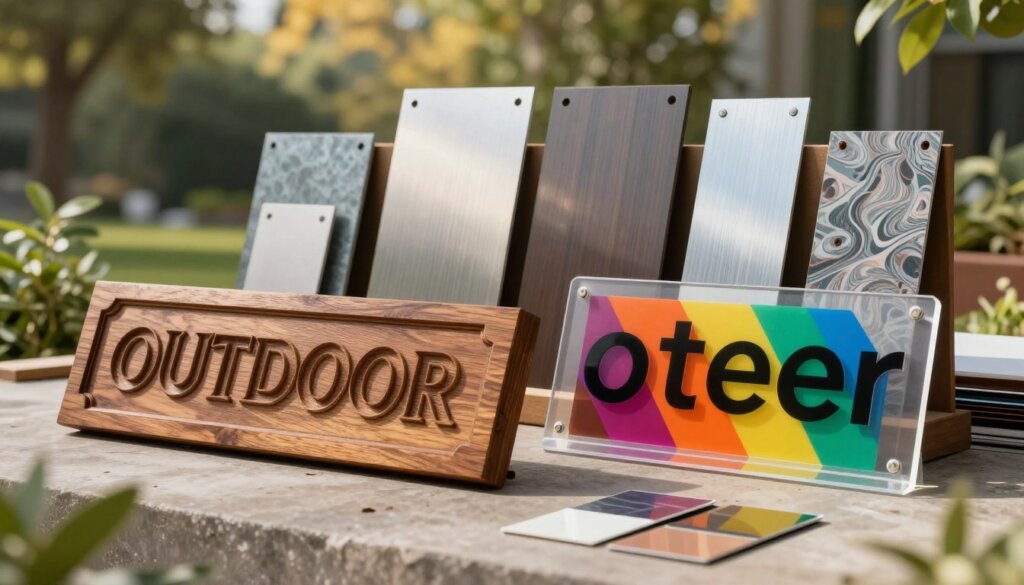
Custom graphics play a big role too. Using UV-resistant inks keeps colors bright. But, make sure the material works with your printing method. This ensures your sign looks great and is tough.
In short, making your outdoor sign is about looks and durability. Pick the right materials and add custom graphics. This way, your sign will show off your brand and handle the weather.
Expert Tips for Choosing the Right Material
Choosing the right material for your outdoor sign can feel overwhelming. But, asking the right questions can make it simpler. Here are some key things to think about when making your decision:
Questions to Ask Before Purchasing
- What’s my local climate like? Knowing your area’s weather is key. Different materials work better in different climates.
- How much maintenance am I willing to do? Some materials need more care than others. Think about what you can handle.
- What’s my budget over a 10-year period? Don’t just look at the upfront cost. Think about long-term costs like maintenance and replacement.
- Are there warranties available? Look for warranties that cover the material’s durability and performance.
- Can I see material samples in person? Seeing samples in person can help you understand the material’s look and feel better.
Resources for Material Research
Researching materials is easier than ever with many resources available:
- Industry Associations: Websites like the International Sign Association offer valuable insights and standards.
- Online Reviews: Look for customer reviews and case studies to learn about real-world experiences with different materials.
- Consult Experts: Don’t hesitate to ask for advice from professionals in the sign-making industry.
- Compare Options: Take your time to compare warranties and ask for references from past clients.
By asking these questions and using available resources, you can make a confident choice about your outdoor sign material.
Conclusion: Making an Informed Decision
Choosing the right material for outdoor signs is key for lasting quality and effectiveness. We looked at different materials, their good points, and their downsides. Each one, from aluminum to eco-friendly options, has special qualities for various needs.
It’s important to know about weather resistance and upkeep. A sign that can handle tough weather will help your brand a lot. Also, think about the cost. Spending more on quality materials might seem pricey at first but can save money later.
Design matters a lot too. The right material can make your sign look great and work well. Think about colors, graphics, and textures to make your sign welcoming. A well-made sign grabs people’s attention and shows off your brand.
In short, picking the best material for outdoor signs depends on what you need most. Look at durability, cost, and how it looks. By choosing wisely, your sign will last long and get your message across well.

