


Ever wondered why some beach flags stand tall while others flop? The answer is simple: the right base makes all the difference.
This guide will help you pick the perfect base for your beach flag. It’s vital for promotional displays, directional signs, or branded flags outside your store. The base you choose is key.
A wobbly flag looks bad and can be dangerous. We’ll cover everything from base types to matching them with your terrain, wind, and flag size.
By the end, you’ll know how to choose a stand that keeps your flag steady. Let’s explore the best solution for your needs.
Key Takeaways
- Understanding the importance of a stable base for beach flags.
- Matching bases with terrain and wind conditions.
- Exploring different types of flag bases available.
- Ensuring safety and professionalism with a sturdy setup.
- Making informed decisions for effective promotional displays.
Understanding Beach Flag Bases
A solid foundation is key to keeping your beach flag standing tall. The base you choose is vital for keeping your flag visible, even when the wind is strong. It’s not just about looks; a strong base also protects your flag and keeps it stable, ensuring safety for everyone.
When picking a beach flag base, remember that the surface matters. Hard surfaces like asphalt or concrete need weight-based stands. But for soft surfaces like grass or soil, you need ground-penetrating bases. This choice is critical for keeping your flag upright and visible.
Importance of a Strong Foundation
Choosing the right base is essential, not just a detail. A sturdy base lets your flag stand up to different weather, so more people can see your message. Whether you have feather flags or teardrop banners, a solid foundation is a must.
Types of Beach Flags
Beach flags come in different sizes, like S, M, L, and XL. Each size needs a different base for support. Knowing this helps you pick the best base for your flag. The right stand not only supports the flag but also makes it more visible, highlighting your message.
Factors to Consider When Choosing a Base
Choosing the right base for beach flags is key. You need to think about wind, terrain, and flag size. These factors help your flag stay stable and look good in different places.
Wind Conditions
Wind is very important for beach flags. Strong winds need a heavier base. For big flags, use a base that weighs 8-12 kg to keep it steady. Smaller flags can use a lighter base.
Type of Terrain
The ground where you set up your flag matters a lot. Soft sand needs a special setup, like a ground spike. Hard surfaces are better with a water weight base or cross base.
Size of the Flag
The size of your flag also matters. A small S flag needs less weight than a big XL flag. Remember, big flags in windy spots need heavy bases. But, don’t use too much for small flags indoors.
By considering these factors, you can pick the best base for your beach flag. This ensures it stays stable and looks great.
Types of Beach Flag Bases
Choosing the right beach flag base is key for better visibility and stability. Each base has its own purpose. It’s important to know what each one is best for. Let’s look at four common types of beach flag bases.
Cross Base
The cross base is light and great for indoor use or calm outdoor spots. It’s easy to set up, making it popular for events. For more stability outside, add water bags to keep the flag steady in light winds.
Spike Base
The spike base is simple and works well on grassy or soft soil. It’s easy to carry and quick to set up. It’s perfect for outdoor events.
Water Weight Base
The water weight base is easy to move when empty. Fill it with water to make a heavy anchor. It’s good for medium, large, and extra-large flags. But, keep it away from freezing to avoid damage.
Ground Screw Base
The ground screw base is great for longer outdoor use or hard ground. It digs into the earth for a strong hold. It’s perfect for lasting setups.
| Base Type | Best Use | Weight | Transport |
|---|---|---|---|
| Cross Base | Indoor/Calm Outdoor | Lightweight | Easy |
| Spike Base | Grass/Soft Soil | Very Light | Very Easy |
| Water Weight Base | All Sizes of Flags | Up to 20 kg (when filled) | Easy (empty) |
| Ground Screw Base | Hard Ground/Longer Use | Varies | Moderate |
Pros and Cons of Each Type
Looking at the good and bad of different beach flag bases can help you decide. Each type has its own special features. Knowing these can help you pick the right one for your needs.
Cross Base Pros and Cons
The cross base is loved for its quick setup and lightweight design. It’s great for carrying flags around. But, it might not stay put in windy weather without extra weight.
Spike Base Pros and Cons
Spike bases are ultralight and easy to use. They’re perfect for soft grounds like sand. But, they don’t do well in strong winds and can’t handle hard surfaces.
Water Weight Base Pros and Cons
Water weight bases are portable when empty and add a lot of weight when filled. They’re good for many uses. But, they can break in cold weather if not drained. Also, you need water to fill them up.
| Base Type | Pros | Cons |
|---|---|---|
| Cross Base | Fast setup, low weight | Not ideal for windy conditions |
| Spike Base | Ultralight, easy to carry | Only for soft ground, less stable in wind |
| Water Weight Base | Portable empty, heavy when filled | Can freeze in winter, needs water source |
Knowing the pros and cons helps you choose the right base. Whether you want something easy to carry, stable, or simple to set up, there’s a base for you.
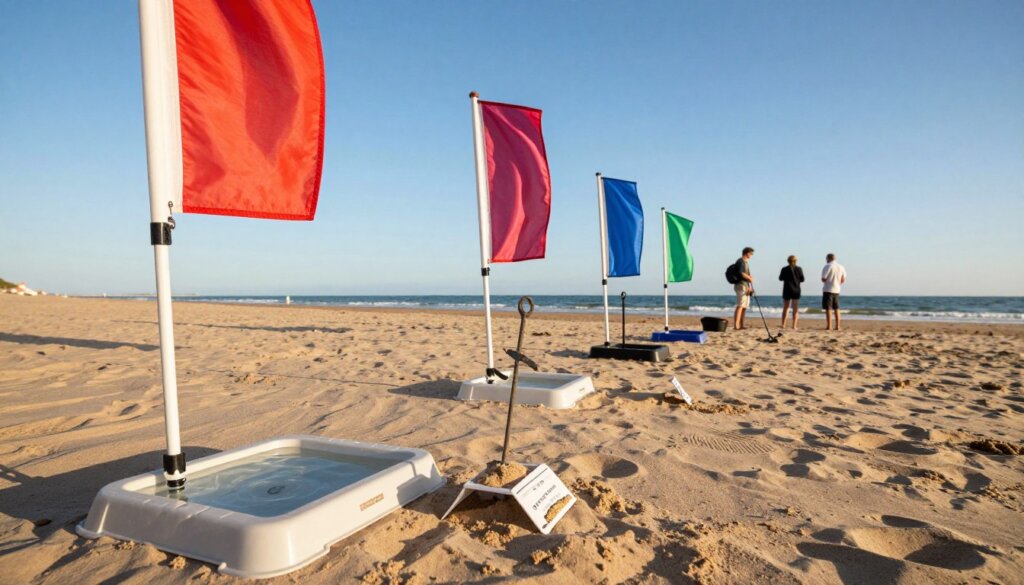
Choosing the Right Base for Wind Conditions
Wind conditions are key when picking a base for beach flags. Wind can turn your flag into a sail, putting pressure on its base. Knowing how wind impacts flags helps you choose the right one for stability.
Wind tests your flag’s stability. Even a light breeze can be a challenge. A rotator is key. It lets the flag spin, reducing wind resistance and stress on the mast and fabric. Without it, your flag may tip or get damaged in strong winds.
How Wind Affects Flags
Flags are meant to wave, but strong winds can cause problems. In high winds, flags become heavy and hard to handle. The base bears more pressure, risking tipping or damage. So, picking a sturdy base is essential.
Ideal Bases for High Winds
In windy areas, you need a base that’s heavy or deeply anchored. Look into:
| Base Type | Weight | Best Use |
|---|---|---|
| Rubber Base | 19 kg | Concrete surfaces |
| Ground Screw | Varies | Soft soil |
| Water Weight Base | Filled with water | Temporary setups |
But, no base can handle hurricane-force winds. In extreme cases, it’s best to remove the flag. This step prevents accidents and keeps your flag in good shape.
Evaluating Terrain Compatibility
Choosing the right base for your beach flag is key. The terrain where it will sit matters a lot. Different places need different bases for stability and to last longer.
Soft Sand Considerations
Soft sand is tricky for flags. A regular spike might not hold well. You should pick a ground screw or a sand anchor instead.
Ground screws dig deep into the sand, keeping your flag steady. They’re great for windy days too. This stops your flag from falling over.
Hard Ground Requirements
Hard surfaces like asphalt or concrete need a different approach. You’ll need a base that’s heavy enough to keep your flag up. Metal plates, water bases, or heavy rubber bases work well here.
A 12 kg metal plate can anchor your flag on sidewalks, even in the wind. For mixed terrain, a water base is a smart choice. It’s empty indoors and filled with water outdoors for extra weight.
Check the ground before setting up your flag. Is it loose or solid? Your choice of base depends on this. The right base supports your flag and makes it more visible and effective.
Weight and Portability of Bases
When picking a beach flag base, think about its weight and how easy it is to move. The right choice can really help, whether you’re moving your flag a lot.
For easy transport, go for a 4 kg metal plate or a cross base. These are light and easy to carry, great for indoor use or places that are sheltered. But, they might not hold up well in windy weather.
Heavier bases, like the 19 kg rubber base, give you more stability. They’re hard to move but keep your flag steady on windy days. If you want something that’s both light and useful, try a water weight base. You can carry it empty and fill it with water where you are, making it handy and efficient.
Consider how often you’ll move your flag. If it’s always at one place, like a storefront, a heavy base is best. But, for events or markets that you only go to on weekends, a light, fillable base will save you from straining your back and make setting up easier.
Customization and Aesthetics
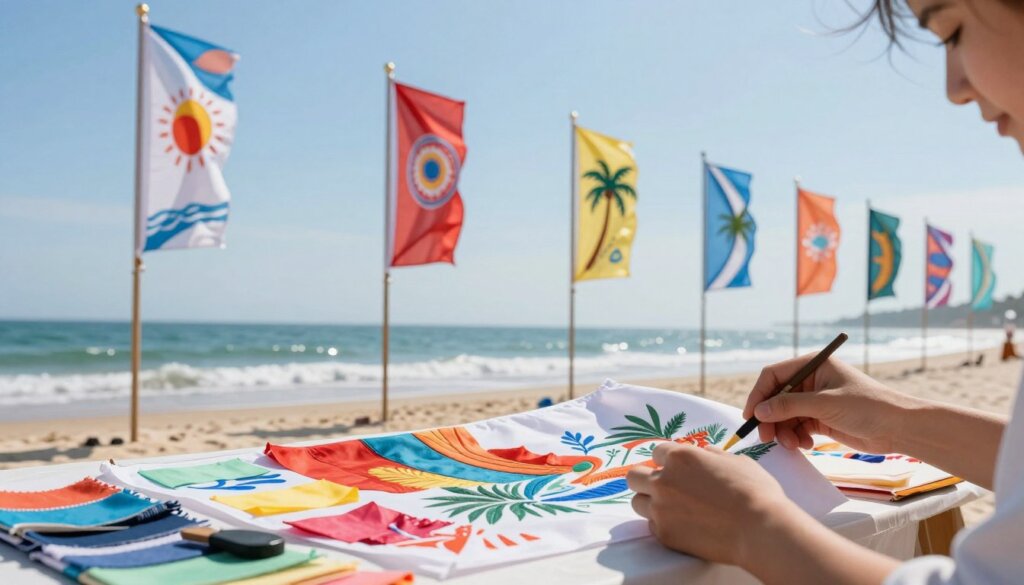
Customizing your beach flag base can make it truly unique. It’s not just about stability; how it looks matters too. Many bases are in neutral colors like black or gray. This lets your flag stand out.
Brands looking to make a splash can choose custom colors or sleeves. For water bases, adding a cover with your branding is a good idea. The aim is to make the base enhance your flag, not overshadow it.
Here’s a table showing some customization options for beach flag bases:
| Base Type | Color Options | Custom Sleeve Availability | Branding Opportunity |
|---|---|---|---|
| Cross Base | Black, Gray | Yes | High |
| Spike Base | Black, Custom | No | Medium |
| Water Weight Base | Clear, Custom | Yes | High |
| Ground Screw Base | Gray, Custom | No | Medium |
In short, a simple base lets your flag’s design be the focus. By matching your base with your flag and mast, you achieve a unified look. This boosts your brand’s image.
Budget Considerations
Your budget is a key factor when choosing the perfect base for your beach flag. The cost of beach flag bases varies a lot. It’s important to find a balance between cost and quality.
For those on a budget, a basic cross base at €19.99 or a simple ground spike is a good choice. These bases work well for occasional indoor use or calm beach days. But, if you plan to use your flag often outdoors, a more durable option is better.
Quality bases, like a water weight base or a heavy-duty metal plate, cost more but are reliable. For example, a 10L water base is about €85. It keeps your flag steady even in windy conditions. Remember, a cheap base that fails can damage your flag or miss out on chances.
Think about the long-term value of your investment. A sturdy base that lasts for years is worth the initial cost. As the saying goes,
“Quality is remembered long after the price is forgotten.”
This approach helps you pick a base that fits your budget and meets your needs well.
Maintenance and Storage Tips
Regular maintenance can make your beach flag base last longer. A bit of care keeps it working well and looking good. Here are some key tips to keep your flag base in great shape.
Cleaning Your Flag Base
After a day at the beach, clean your flag base. Rinse off salt and sand to stop corrosion, which is important for metal parts. For water bases, drain them fully before storing. Water in cold temperatures can cause damage because ice expands and might crack the plastic.
Proper Storage Techniques
Store your beach flag base in a dry, cool spot. If it has parts that move, like a rotator, a little lubricant can help. Storing it right prevents warping, rust, and damage from UV rays, keeping it ready for next season.
| Maintenance Task | Frequency | Notes |
|---|---|---|
| Clean Base | After Each Use | Rinse off salt and sand |
| Drain Water | Before Storage | Prevent freezing damage |
| Lubricate Moving Parts | Seasonally | Ensure smooth operation |
| Inspect for Damage | Before Each Use | Check for cracks or rust |
Safety Considerations
When showing off beach flags, safety comes first. A falling flag can hurt people or damage things. So, make sure your flag base is strong and steady.
Before you start, check that the base is set up right. Make sure it’s heavy enough for the weather.
On hard ground, make sure the base is flat. This prevents people from tripping. In places where lots of people walk, put the flag where it won’t get in the way. Tie up any loose strings carefully.
The rotator is a key safety part. It lets the flag move with the wind, so it doesn’t jerk or tip over. This is very important when it’s windy. If the wind gets too strong, take down the flag to stay safe.
Here’s a quick safety guide to help you enjoy your display safely:
- Check that the base is securely assembled.
- Ensure the flag is positioned away from high-traffic areas.
- Use a rotator to minimize strain on the flag and base.
- Lower the flag in very windy conditions.
Recommended Brands for Flag Bases
Choosing the right brand for your beach flag base is key. It boosts both durability and looks. Many brands are known for their quality and making customers happy. Look for ones that offer reliable products, as they face all kinds of weather.
Good brands give warranties and use top-notch materials. This means your flag base can handle the elements. Here are some top brands to think about:
| Brand | Quality Rating | Warranty | Customer Feedback |
|---|---|---|---|
| Carrot-Top Industries | High | 5 Years | Positive |
| FlagCenter | Very High | Lifetime | Excellent |
| FlagSource | Moderate | 2 Years | Mixed |
Customer reviews are important when picking a brand. They show how well the bases do in real life. Look for reports of problems like cracking or leaking. Brands that use UV-resistant plastics and powder-coated metals last longer.
Choosing a brand that values quality and has happy customers is smart. It means your beach flag base will last for many years.
Where to Buy Beach Flag Bases
Finding the right place to buy beach flag bases can make your experience better. There are many options to choose from, based on what you need and how much you want to spend. You can shop online or visit local stores, both of which have reliable sources.
Online Retailers
Shopping online is convenient and offers a wide range of beach flag bases. Sites like Amazon and eBay have user reviews and good prices. They also have deals that include masts and flags.
For specific brands or custom options, b2b.karogupasaule.lv and flag.lv are great. These sites focus on quality and have a variety of products. Always check shipping costs and return policies, as these can affect your purchase.
Local Stores
Don’t forget to check local sign shops or event supply stores. They might have beach flag bases and can give you advice. Buying locally means you can get your flag quickly and start using it right away.
If you need a custom printed flag, many printing companies sell bases too. This can save you time and ensure your flag and base match. Looking at both online and local stores can help you find the best deals and products.
Setting Up Your Beach Flag
Setting up your beach flag is easy if you follow these steps. You can use a cross base, ground screw, or water weight base. Each has its own way of being set up. Let’s look at how to make sure your flag is tall and secure.
Step-by-Step Installation Guide
Here’s how to set up your beach flag based on the type of base you have:
- Cross Base: Unfold the legs of the cross base and insert the mast. If you’re outdoors, fill the water bags attached to the base for added stability.
- Ground Screw: Twist the ground screw fully into the soil until the plate is flush with the ground. Then, slide the mast into the top of the screw.
- Water Weight Base: Place the empty base in your desired location, fill it with water, and then mount the flag securely onto the mast.
Always check that the mast is vertical and the base is level. A quick shake test can help you identify any wobble, ensuring your flag is stable.
Tips for a Secure Setup
For extra security, consider using a twin base. This type has two anchor points, which makes it less likely to rotate and more stable.
Also, check the weather forecast before leaving your flag unattended. Windy conditions can cause flags to sway or even topple. So, be ready to take them down if needed.
Seasonal Considerations
Knowing how to care for your beach flag base all year is key. Each season has its own challenges and needs. This keeps your flag base in great shape for your events.
In summer, your flag base gets a lot of use. But, the sun’s strong rays can make plastics fade. Choose UV-resistant materials to keep your flag’s colors bright.
Winter brings its own set of challenges, like water bases freezing. Always drain them before storing to avoid damage. Metal bases need drying to prevent rust, which can happen if they get wet and then freeze.
For year-round use, consider bases that don’t need water. Rubber or metal plates are good for stability and don’t freeze. Storing them in a shed or garage during off-seasons helps them last longer.
Here’s a quick guide for seasonal care:
- Spring: Check and clean your flag base for summer.
- Summer: Watch for UV damage; store indoors during storms.
- Fall: Get ready for winter; drain water bases and clean.
- Winter: Store indoors; check for rust on metal bases.
Eco-Friendly Options
In today’s world, choosing eco-friendly beach flag bases is key. Sustainability is more than a trend; it’s our duty. By picking eco-friendly options, you help the planet while enjoying a reliable flag base.
Look for bases made from recycled materials. Many makers now use durable, sustainable materials. For example, metal bases can be recycled, cutting down on waste.
Sustainable Material Choices
Choosing sustainable materials for your beach flag base matters a lot. Here are some good choices:
| Material Type | Recyclable | Environmental Impact |
|---|---|---|
| Metal | Yes | Low; can be reused |
| Plastic (Certain Types) | Yes | Moderate; depends on type |
| Water Bases | No | Low; uses local resources |
Water bases are great. They use local water instead of heavy materials, cutting down on carbon emissions. This simple choice helps the environment a lot.
Recycling Old Bases
When your beach flag base is no longer needed, recycle it. Many recycling centers accept plastics and metals. Always check what your local facilities can process.
“Small choices can lead to big changes. Opting for a durable base that lasts longer reduces waste and helps the planet.”
By choosing wisely, you help the planet. Every small step helps, and your beach flag base can be part of the solution.
Conclusion and Final Thoughts
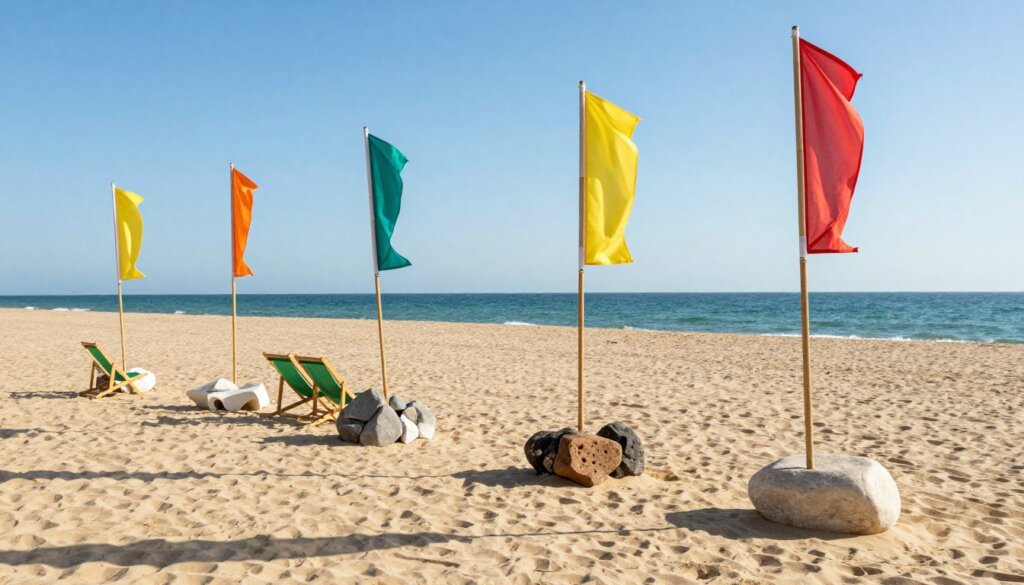
Choosing the right beach flag base is key for a good display. It affects how well you can see it, how stable it is, and how safe it is. We looked at many factors like wind, terrain, and flag size. Each one is important for picking the best base for you.
We talked about different bases like cross bases, spike bases, and water weight bases. Each has its own good and bad points. Knowing this helps you choose wisely. A good base makes your flag work better and stay safe in different situations.
Think about your setting when picking a base. Do you need something light for indoor events or something strong for the beach? The right choice is out there. Spending money on quality means you’ll be happy and your brand will look great.
Don’t forget about safety and keeping things in good shape. Taking care of your flag and base makes them last longer. With the right info, you can pick the best for your beach flag display. Here’s to successful and steady displays ahead!

