


Ever thought about how a simple piece of fabric can become a powerful message? Welcome to the world of flag printing. Here, modern materials and new technology come together to make amazing, lasting flags. We’ll see how the right mix of flag printing materials and methods can boost your brand and communication.
In today’s world, businesses and event planners want to be noticed. High-quality printing can make a big difference. With bright fabrics and the latest techniques, custom flags are more than just decorations. They’re key tools for effective branding.
Let’s dive deeper into this exciting topic. We’ll learn how flags can send messages and grab attention.
Key Takeaways
- Flag printing combines innovative materials and technology.
- Custom flags enhance branding and visibility.
- High-quality printing solutions are essential for effective communication.
- Vibrant fabrics contribute to eye-catching designs.
- Large format printing is key for businesses to stand out.
What is Flag Printing?
Flag printing turns designs into fabric wonders. It’s about putting images, logos, or patterns on fabric. This makes flags that are bright and last long, perfect for many uses. It’s key for showing off messages through visuals, from ads to national pride.
Definition and Overview
Flag printing is about putting designs on fabric with different methods. It makes custom flags for any need. The process uses top-notch materials and tech to show off designs well.
“Our fabric flag printing process uses the latest technology and high-quality materials to ensure that every flag we produce perfectly reflects your design.”
Historical Background
Flag printing’s history spans centuries, from hand-painted banners to today’s digital methods. At first, artisans painted flags by hand, using natural dyes. Later, printing tech changed the game, making it easier and faster.
In the 20th century, new printing ways like screen printing and dye sublimation came along. These made flags more colorful and lasting. They also let for more custom options and quicker making, meeting growing demand.
| Printing Method | Description | Advantages |
|---|---|---|
| Screen Printing | Involves pushing ink through a mesh screen onto the fabric. | Cost-effective for large runs, vibrant colors. |
| Dye Sublimation | Uses heat to transfer dye onto fabric, creating a permanent bond. | High-quality images, soft feel, durable. |
| Digital Printing | Directly prints designs onto fabric using inkjet technology. | Quick turnaround, great for small quantities. |
Knowing flag printing’s history shows its deep roots and growth. Today, it’s more than a craft; it’s a way to share identity, celebrate, and make a mark.
Importance of Flag Printing in Signage
Promotional flags are key to boosting brand visibility and recognition. They are more than just decorations; they carry messages and grab attention at events. At trade shows, storefronts, or outdoor events, well-printed flags can change how people see your brand.
Flags play a big role in branding. They share a brand’s identity and values. A well-made flag can make a strong first impression, helping people remember your brand. As the saying goes,
“Advertising stands and banners attract attention with precise image reproduction.”
This shows how flags can make a brand’s message stand out and be remembered.
The look of promotional flags is also important. Their flowing fabric and bright colors catch the eye. This makes events look more professional, as noted in the observation that
“Exhibition stands and pop-up tents add professionalism to events.”
A beautifully designed flag can make your brand stand out in a busy market.
In short, promotional flags are vital for good signage. They boost brand visibility and add to a brand’s look. Investing in quality flag printing can make a big difference by leaving a lasting impression on customers.
Materials Used in Flag Printing
The quality of a flag starts with the fabric. Choosing the right material is key. Different fabrics have unique qualities that affect how they look when printed.
Types of Fabrics
Common fabrics for flag printing include:
- Polyester: It’s durable and doesn’t fade easily, perfect for outdoor flags.
- Nylon: It’s light and strong, making flags flutter well in the wind.
- Cotton Blends: They have a classic look but might not last as long as synthetic ones.
Synthetic vs. Natural Materials
It’s important to know the difference between synthetic and natural materials. Synthetic fabrics like polyester and nylon last longer and handle weather better. They’re also easy to clean. Natural fabrics, like cotton, feel softer but fade faster and need more care.
Eco-friendly Options
Today, eco-friendly materials are popular. Fabrics from recycled plastics or organic cotton are good for the planet. They keep colors bright and last long.
The fabric you choose affects how well the printing works. The right material makes your flag look great and last long.
| Fabric Type | Durability | Ideal Use | Environmental Impact |
|---|---|---|---|
| Polyester | High | Outdoor Flags | Moderate |
| Nylon | High | Outdoor Flags | Moderate |
| Cotton Blend | Medium | Indoor Flags | High (if organic) |
| Recycled Polyester | High | Outdoor Flags | Low |
Printing Technologies in Flag Printing
Technology is key in flag printing, making designs pop. Knowing the printing methods helps pick the right one for your project. We’ll look at digital textile printing, screen printing, and dye sublimation. Each has its own benefits and fits certain needs.
Digital Printing Techniques
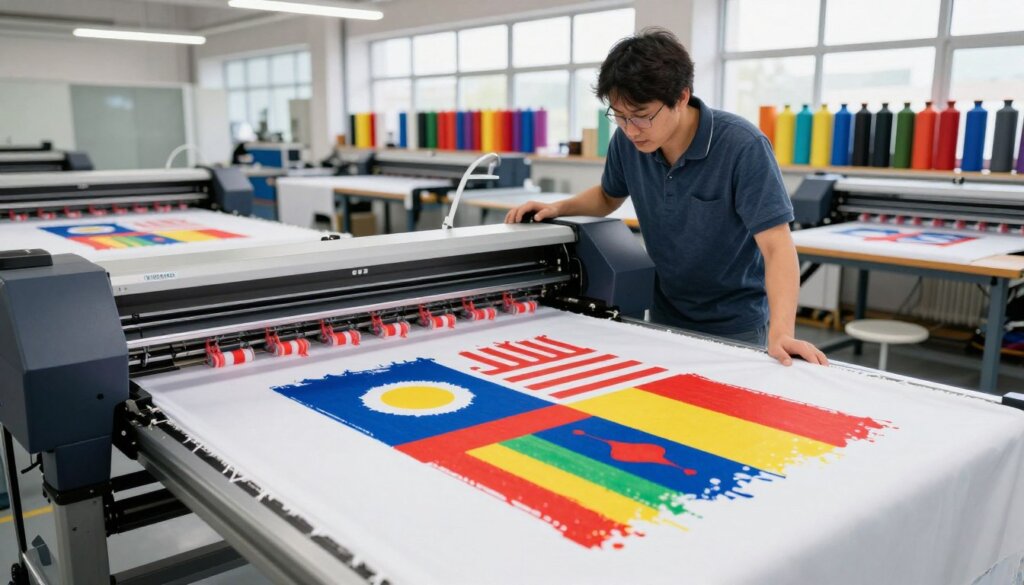
Digital textile printing has changed the flag game. It prints detailed, full-color designs right on fabric. This uses inkjet tech, so you can make complex images without screens or plates. It’s great for small orders or custom designs, saving on setup costs.
It also lets you change designs easily without extra costs. This makes it a top choice for businesses wanting unique flags.
Screen Printing Methods
Screen printing is popular for big orders. It uses a stencil for each color, pushing ink onto fabric. It’s known for bold colors and is cheaper for lots of flags.
But, it’s not best for detailed designs with many colors. Each color needs a screen, raising costs and time. Yet, it’s loved for its lasting colors and vibrant look.
Benefits of Dye Sublimation
Dye sublimation stands out in flag printing. It turns dye into gas that goes into the fabric. This makes colors bright and lasts long, becoming part of the fabric.
“Dye sublimation is one of the most popular methods, providing bright and durable colors.”
This method works great on polyester and is perfect for detailed designs. It’s also great for outdoor flags, keeping colors bright under sunlight.
| Printing Method | Best For | Advantages | Disadvantages |
|---|---|---|---|
| Digital Textile Printing | Custom designs, small runs | Flexible, detailed, no setup costs | Higher cost per unit for large runs |
| Screen Printing | Large orders, bold designs | Cost-effective for bulk, vibrant colors | Not ideal for complex designs |
| Dye Sublimation | High-detail, outdoor flags | Durable, vibrant, fade-resistant | Limited to polyester fabrics |
Picking the right printing tech is key for great flag printing. Each method has its own strengths for different needs. Knowing these helps make a smart choice for your project.
Choosing the Right Material for Your Needs
Choosing the right material for your flag is key for its look and life. There are many options, and it’s important to think about a few things. These include how you plan to use the flag, where it will be, and how long you want it to last.
Factors to Consider
When picking materials for your flag, keep these in mind:
- Intended Use: Is the flag for inside or outside? Outdoor flags need strong materials.
- Location: The weather where the flag will be matters a lot.
- Expected Lifespan: Think about how long you want the flag to last. Some materials last longer.
Durability and Weather Resistance
Flags need to be tough, even more so if they’re outside. Materials like PVC banners and tents are made for the weather. They keep your flag looking good and staying strong.
Here’s a look at some common flag materials:
| Material | Durability | Weather Resistance | Best Use |
|---|---|---|---|
| Polyester | High | Good | Outdoor Flags |
| Nylon | Medium | Excellent | Windy Areas |
| Canvas | High | Moderate | Indoor Displays |
| PVC | Very High | Excellent | Outdoor Events |
Knowing these details helps you pick the best material. Your flag will look great and last through many weather changes.
Preparing for Flag Printing Projects
A successful flag printing project starts with careful planning and design. This stage is key as it sets the tone for the whole process. Knowing what you need will help you make flags that look good and get your message across.
When it comes to design considerations, several factors are important. First, you need to figure out the right resolution for your design. A higher resolution means your flag will look sharp and professional. As noted,
“Understanding the required resolution is the first step toward professional visual communication.”
Next, think about color profiles. Different printing methods need specific color settings. Knowing these will make your final product pop. Also, consider typography. Choose a font that’s easy to read from far away, so your message is clear.
Imagery is also key. Use high-quality images that fit your message. Avoid complex designs that can get messy on large surfaces. Instead, go for something clean and simple that grabs attention.
Moving on to artwork requirements, setting up your files right is critical. Most printers prefer vector files because they can be scaled without losing quality. Make sure all text is converted to outlines to avoid font problems. Double-check that your files meet the printer’s specs to avoid delays.
By focusing on these key areas of banner design technology, you can make the design process fun and easy. Whether you’re experienced or new, these tips will help you prepare for a successful flag printing project.
The Process of Flag Printing
Flag printing is a detailed and interesting process. It shows the skill that goes into making a custom flag. Each step, from preparing the file to the final touches, is key to a product that meets your expectations.
Steps in the Printing Process
The first step is turning the design into a digital format. This includes:
- File Preparation: Making sure the artwork is in the right format and resolution.
- Proofing: Creating a sample to check colors and details before printing.
- Printing: Using advanced methods to put the design on fabric.
- Finishing: Adding hems, grommets, or other features to make it last longer.
Each step is important for a top-quality product. Our team of experts is here to help you make the perfect custom flag.
Quality Control Measures
Quality control is a big part of flag printing. It makes sure every flag is up to standard before you get it. Our quality checks include:
- Inspection: Checking for color accuracy and fabric quality.
- Testing: Checking how durable it is in different conditions.
- Final Review: A detailed check before shipping.
Our team works hard from the start to the end to make sure you’re happy. This focus on quality means your flag will look amazing and last a long time.
Customization Options Available
Discover the many ways to customize your flags. Make your flag as special as your message. You can choose from standard shapes or go for something unique. Let’s explore how you can make your flag just right for you.
Sizes and Formats
Flags come in all sizes. Need a small one for a desk or a big banner for an event? We can make it happen. You can also pick from different shapes:
- Rectangular
- Square
- Custom shapes
This means you can design a flag that fits your exact needs.
Color Choices and Finishes
Choosing the right colors is key for your flag. Pick from a wide range to match your brand or taste. You can also add finishes to make your flag look and feel better:
- Hemming for durability
- Grommets for easy hanging
- Pole sleeves for secure mounting
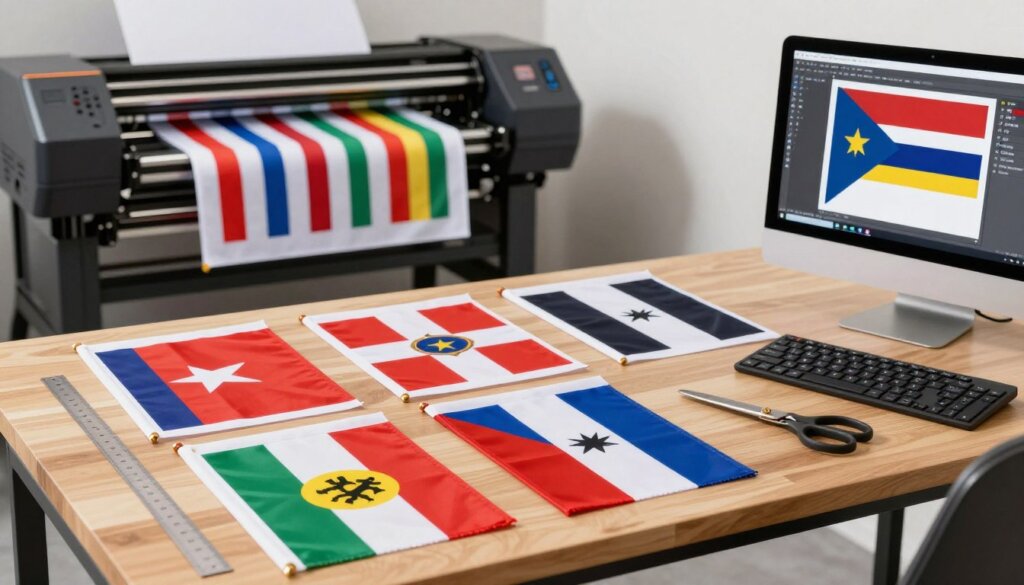
With these options, your flag can show off your personal style. Don’t settle for the usual. Create something that speaks to your audience.
Cost Factors in Flag Printing
Knowing the costs of flag printing helps you make smart choices. Several things affect the price, like the materials, flag size, how many you order, and the printing method. By understanding these, you can plan your budget well without sacrificing quality.
Understanding Pricing Structures
Flag printing prices change based on a few key things. The materials used are a big factor. Indoor flags need different stuff than outdoor ones, affecting both cost and how long they last. Here’s a quick look at the main cost factors:
| Cost Factor | Description | Impact on Pricing |
|---|---|---|
| Material Type | Natural vs. synthetic fabrics | Natural fabrics are pricier but look better. |
| Size | Dimensions of the flag | Bigger flags cost more because of more material and time to print. |
| Quantity | Number of flags ordered | Buying in bulk can lower the cost per flag. |
| Printing Technique | Digital vs. screen printing | Different methods cost differently, with digital being more flexible. |
Budgeting for Your Project
When planning your flag printing budget, think about both the upfront cost and long-term savings. Spending more on quality materials might seem pricey at first. But, they last longer and save money in the long run. Always compare prices from different places to find the best deal.
In short, knowing about flag printing costs helps you make better choices. By thinking about materials, sizes, how many you need, and printing methods, you can manage your budget well. This way, you get the best value for your money.
Common Applications of Flag Printing
Flags are versatile tools used in many settings. They are key for event marketing and promotional purposes. This makes them a must-have in advertising.
Flags are a hit in event marketing. They add excitement to events like grand openings, festivals, or community gatherings. Custom flags match the event’s theme, making your message hit home with attendees.
Event Marketing
Flags boost visibility at events. Businesses use them at trade shows or outdoor festivals. A well-placed flag can guide people to your booth or display.
- Trade Shows: Flags draw visitors to your booth, making your brand pop.
- Community Events: Flags promote local events, boosting participation and engagement.
- Sporting Events: Flags add to the excitement, improving team spirit and fan interaction.
“Looking for advertising flags for your business, custom flags for an event, or personalized flags for your organization? Our fabric flag printing services are ideal for you.”
Promotional Uses
Flags also work well for promotions. They serve as outdoor advertising solutions to boost brand visibility. They’re great for storefronts and car dealerships, drawing in customers and sparking interest.
- Cost-Effective: Flags are cheaper than other ad methods.
- Versatile: They work indoors and outdoors, fitting various marketing plans.
- Customizable: Flags can reflect your brand’s identity and message.
In summary, flags are more than just decorations. They’re essential for marketing and branding. Their role in event marketing and promotions shows their value in today’s competitive world.
Maintenance and Care for Printed Flags
Want your flags to shine bright for years? Here’s how to keep them looking their best. Proper maintenance is key to ensuring that your printed flags retain their vibrant colors and last through various weather conditions. By following some simple cleaning techniques and storage solutions, you can protect your investment and enjoy your flags for many seasons.
Cleaning Techniques
Cleaning your printed flags is essential to maintain their appearance. Here are some effective methods:
- Gentle Hand-Washing: Use cold water and mild detergent. Gently scrub the fabric with a soft cloth to avoid damaging the print.
- Machine Washing: If the flag is machine washable, place it in a mesh laundry bag and use a gentle cycle with cold water.
- Spot Cleaning: For small stains, use a damp cloth with mild soap. Blot the area gently without rubbing.
Storage Solutions
When not in use, proper storage is key to keep your flags in top condition. Here are some tips:
- Folding: Fold your flags neatly to avoid creases. Use acid-free tissue paper between folds to prevent color transfer.
- Hanging: If space allows, hang flags in a cool, dry place to avoid moisture buildup.
- Storage Containers: Use breathable storage bags or boxes to protect flags from dust and light exposure.
| Method | Best For | Tips |
|---|---|---|
| Gentle Hand-Washing | All flag types | Use cold water and mild detergent |
| Machine Washing | Durable fabrics | Use a mesh bag and gentle cycle |
| Spot Cleaning | Small stains | Blot gently, do not rub |
By following these maintenance tips, you can ensure that your printed flags remain vibrant and ready for their next appearance. Remember, a little care goes a long way in preserving the beauty of your flags!
Trends in Flag Printing
Innovation is leading the way in flag printing, with new materials and techniques changing the game. Designers and businesses are finding exciting new ways to create. The future of flag printing is looking bright, with eco-friendly and smart textiles leading the charge.
The trend towards eco-friendly materials is growing. Companies are now using fabrics made from recycled materials. This move is good for the planet and attracts customers who care about the environment.
Hybrid printing technologies are also on the rise. They mix digital and traditional printing to create vibrant, high-quality prints. This means businesses can make eye-catching flags that grab attention anywhere.
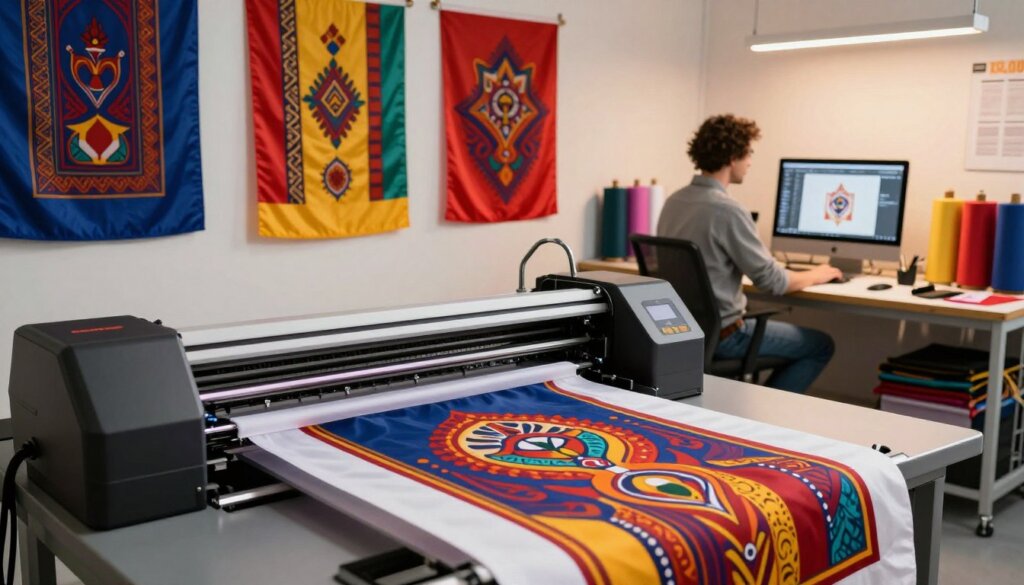
Innovations in Materials
Modern printers can now print on hard surfaces. This opens up new possibilities for interior designers and those in environmental advertising. It lets flags be used in many ways, not just the usual ones.
Emerging Printing Technologies
Augmented reality (AR) is entering the flag printing world. It adds interactive elements to flags. For example, AR flags can come to life at events, making them unforgettable.
| Trend | Description | Benefits |
|---|---|---|
| Eco-friendly Materials | Fabrics made from recycled sources | Supports sustainability and attracts eco-conscious consumers |
| Hybrid Printing | Combines digital and traditional printing methods | Delivers high-quality, vibrant prints |
| Augmented Reality | Interactive elements in flag designs | Enhances customer engagement and experience |
Looking ahead, these trends show a move towards innovation and sustainability in flag printing. Keeping up with these changes can help businesses stay ahead and make a mark in the market.
Environmental Impact of Flag Printing
Looking into the environmental effects of flag printing shows the industry’s move towards being more sustainable. As people become more aware of environmental issues, many businesses are trying to reduce their impact. This part talks about how flag printing is becoming more eco-friendly and the need for recyclable materials.
Sustainability Practices
One big step in flag printing is using eco-friendly water-based inks. These inks cut down on harmful emissions, making the printing process better for the environment. Companies that care about the planet often choose printers that use these inks.
Also, sustainable production methods are key in cutting down waste. Many printers now use ways to use less energy and recycle more. By picking a printer that does this, businesses help make the planet a bit healthier.
Recyclable Materials
For businesses looking to stand out, using recyclable materials is key. Many flag printing companies offer options made from recyclable polyester. These materials help reduce waste and attract customers who care about the environment.
When picking materials for flag printing, think about these points:
| Material Type | Recyclability | Durability | Environmental Impact |
|---|---|---|---|
| Polyester | Yes | High | Low |
| Cotton | Yes | Medium | Medium |
| Nylon | No | High | High |
By picking recyclable materials and eco-friendly inks, businesses can help make flag printing more sustainable. This not only helps the environment but also makes the brand look good to customers who care about eco-friendly practices.
Case Studies: Successful Flag Printing Projects
Let’s explore how flag printing has helped businesses and communities. These stories show how custom flags can leave a lasting visual impact.
Business Signage
A local café wanted to draw in more customers. They made custom flags with their logo and promotions. The outcome was impressive:
- Increased Foot Traffic: The café got 30% more visitors in just a month.
- Enhanced Brand Visibility: The flags made the café pop in a crowded area.
- Positive Customer Feedback: Many said the flags were why they came.
Community Events
A community festival also saw success with colorful banners. The organizers used flags to make the event lively:
- Vibrant Decorations: The flags added a fun vibe, making the event welcoming.
- Improved Navigation: Directional flags helped people find their way.
- Community Engagement: Local businesses sponsored flags, boosting community pride.
These stories show the power of branding and visual appeal. Flag printing can make a big difference for businesses and community events.
FAQs about Flag Printing
Curious about flag printing? We have answers! In this section, we’ll tackle some of the most common questions people have. We’ll cover everything from turnaround times to design file requirements. Our goal is to provide clear and helpful insights.
Commonly Asked Questions
- What is flag printing? Flag printing is the process of making flags using digital and screen printing technologies.
- What is large format printing?
“Large format printing is a technology for creating big advertising materials.”
- What are the typical turnaround times? Turnaround times vary based on project complexity and printer workload. Most orders are done in 5-10 business days.
- Is there a minimum order requirement? Yes, many printers require a minimum order. This can start at one or two flags, depending on material and printing method.
- What file formats do you accept for designs? Printers usually accept PDF, AI, and EPS formats. Always check with your printer for specific requirements.
Expert Answers
Understanding flag printing can help you make better choices. Here are some expert insights:
| Question | Answer | Expert Tip |
|---|---|---|
| What materials are best for outdoor flags? | Durable fabrics like polyester or nylon are ideal for outdoor use due to their weather resistance. | Consider using double-sided printing for visibility from both sides. |
| Can I customize my flag design? | Yes! Most printing services offer extensive customization options. | Use bold colors and clear images for maximum impact. |
| How do I care for my printed flag? | Regular cleaning and proper storage can extend the life of your flag. | Always follow the care instructions provided by your printer. |
Connecting with Professional Printers
Ready to bring your flag design to life? Finding a reputable printing partner is key for quality and satisfaction. Start by looking into local and online printing companies that focus on flag printing. Check out reviews and testimonials to see if they’re reliable.
When you reach out to them, ask important questions. Find out what materials they use, as it affects your flag’s look and durability. Also, make sure they can meet your deadlines without sacrificing quality.
Requesting samples of their work is a smart move. It shows you their printing quality and design skills. Look closely at the details, like color accuracy and fabric choices. Be wary of unclear pricing or if they don’t want to give references.
Remember, clear communication is essential. A good printer will listen to your ideas and offer helpful advice. At Sazinieties ar mums jau šodien, we’re here to help bring your custom flag design to life! Working with a professional who gets your vision will make your flag look amazing.

