







Ever wondered what makes a sign stand out? Is it the old-school glow of glass tubes or the new, energy-saving LED lights? Let’s dive into the battle of two top picks for business signs!
We’ll look at the main differences between these two lighting types. Glass tubes bring a high-end look that can make any storefront shine. On the other hand, LEDs are tough and save energy, which can cut down your costs over time.
If you own a business or just want to brighten up your home, knowing these differences is key. By the end of this article, you’ll know the good and bad of each choice. This will help you decide with confidence.
Key Takeaways
- Glass tubes provide a classic, premium look.
- LED options are energy-efficient and durable.
- Your choice should align with brand positioning.
- Both options can enhance curb appeal effectively.
- Understanding the differences helps in making an informed decision.
What are LED Neons?
LED neons are a new twist on neon lights, blending modern tech with art. They look like classic neon but have big advantages. Let’s explore what makes them special.
Definition and Features
LED neons are made of flexible tubes with tiny LED lights inside. They’re wrapped in materials like PVC or silicone. This setup gives a smooth light glow, just like neon.
They’re also super flexible, bending into many shapes. This makes them great for creative projects.
LED neons run on low voltage, about 3 to 4 volts for a 50 cm strip. This low power use is both energy-saving and safer for many places.
How LED Neons Work
LED neons work simply yet effectively. The LED strips light up when electricity flows through them. The material around them spreads the light evenly, creating a bright glow.
This setup allows for a steady light that can be adjusted in brightness. This makes LED neons useful for many settings.
Common Applications
LED neons are very versatile and are used in many ways. Here are some common uses:
- Signage: Businesses use LED neons for eye-catching signs that draw in customers.
- Interior Decor: Homeowners add LED neons to their decor for a modern look.
- Automotive Tuning: Car lovers use LED neons to make their vehicles look better.
- Event Lighting: LED neons are popular for parties and events, providing bright and customizable lights.
| Application | Benefits | Examples |
|---|---|---|
| Signage | Attracts attention | Storefront signs |
| Interior Decor | Enhances ambiance | Wall art, mood lighting |
| Automotive Tuning | Customizable aesthetics | Under-glow lights |
| Event Lighting | Creates atmosphere | Wedding decorations |
What are Classic Glass Neons?
Classic glass neons are the first type of neon lighting. They mix art and technology in a special way. These tubes are filled with gases like neon, which light up when electricity flows through them.
This light is often seen in bright signs and lights. It’s why many people love classic glass neons.
Definition and Features
A classic glass neon is a special tube that glows with electricity. Skilled artists bend these tubes by hand over a flame. This lets them make detailed designs.
The most famous color is a steady orange-red. But, different gases can make other colors too.
These tubes can last up to 80,000 hours with care. Their handmade quality makes them valuable. They’re not just lights, but also pieces of art.
How Glass Neons Work
Electricity makes the gas inside the tube glow. This is called gas discharge. The color of the light depends on the gas and the coating inside the tube.
For example, using argon gas with a special coating can make blue light.
Historical Context
The history of classic glass neons started in 1910. Georges Claude, a French engineer, first showed this technology. Claude built on the work of chemists like William Ramsay and Morris Travers.
Neon signs became famous in cities worldwide. They symbolized nightlife and creativity.
As Claude said, “Neon is a symbol of our modern age.” This shows how much classic glass neons have influenced culture and design. They continue to captivate people today.
Key Differences in Appearance
Neon signs come in two main types: LED and glass. Each has its own look, making them perfect for different uses. We’ll look at three main differences: color, thickness, and light spread.
Color Vibrancy
Color grabs your attention in neon signs. Glass neons have deeper colors that glow from inside. This creates a mesmerizing effect and adds warmth.
LED neons, on the other hand, shine with bright, even colors. They might not have glass’s depth but offer clear brightness. This makes them great for modern signs.
Thickness and Flexibility
LED neon flex is much thinner than glass. This lets artists make detailed, curved designs easily.
Glass neons, being rigid, need careful bending. This makes them perfect for classic designs. The bending skill adds to their charm.
Light Distribution
How light spreads out is key in neon signs. Glass neons light up all around, creating a cozy glow. This fills the space beautifully.
LED neons light up in a 180° arc. This focused light is good for certain designs but doesn’t spread out like glass. Knowing this helps pick the right one for your project.
| Feature | LED Neons | Glass Neons |
|---|---|---|
| Color Depth | Bright and consistent | Deeper and richer |
| Thickness | Thinner and flexible | Thicker and rigid |
| Light Distribution | 180° direction | 360° around the tube |
Energy Efficiency Comparison
LED neons are way more energy-efficient than traditional glass neons. Knowing how they use energy can save you money and help the planet.
LED Neons Energy Use
LED neons use up to 80% less energy than glass neons. This is because they work at lower voltages. So, they cut down your electricity bills and reduce carbon emissions.
Glass Neons Energy Use
Glass neons need more energy to light up. They use high-voltage transformers. Even with electronic transformers, they can’t match LED neons in energy efficiency.
Cost Implications
Using less energy means big savings over time. Here are some important points:
- LED neons save money, making them a smart choice for businesses and homes.
- Glass neons are stunning but might cost more in utility bills.
- LED neons offer a faster return on investment because they use less energy.
Whether it’s for a storefront or your home, the LED neon benefits are obvious. LED neons brighten up your space and support green practices.
Durability Assessment
LED neons and classic glass neons have different durability stories. Knowing how long they last helps you pick the best for your needs.
Lifespan of LED Neons
LED neons last about 5 to 10 years. They might seem shorter than glass neons, but they’re more durable. They’re great for places with lots of people because they can handle impacts well.
Lifespan of Glass Neons
Classic glass neons can last 10 to 15 years with good care. A well-kept glass neon can run for up to 80,000 hours without stopping. But, they’re very fragile, like a glass ornament. A small bump can cost a lot to fix.
Factors Affecting Longevity
Many things affect how long neon lights last. For LED neons, the transformer’s quality and where they’re used matter a lot. Glass neons’ lifespan depends on gas sealing quality and the environment.
In short, both LED neons and glass neons have their own benefits. If you want something durable and can handle impacts, choose LED neons. But, if you like the classic look and a longer life, glass neons might be for you.
Installation Considerations
Choosing between LED and glass neon signs can change your installation experience. Each type has its own needs and challenges. These can affect how easy or hard it is to set up your sign.
LED neons are easy to install. They are light and come with simple mounting systems. DIY fans can often put up a small sign indoors with just a few tools. LED neon flex is flexible, making setup quick and saving time and money.
Ease of Installing LED Neons
LED neons need only a few clips or channels to hang. This makes them quick to set up. They are also light, so you don’t have to worry about supporting them, making them great for many places.
Complexity of Installing Glass Neons
Glass neons, on the other hand, need more care. They are heavier and more delicate, requiring a pro to handle. Setting them up involves high-voltage wiring, so you’ll need a skilled electrician. This adds to the time and cost of your project.
Cost of Installation
Installation costs can be as high as making the sign itself, for outdoor or rooftop signs. You’ll need to think about scaffolding, weatherproofing, and structural support. While LED neons save on labor and time, glass neons might cost more due to their detailed setup needs.
Safety Factors
Safety is key when picking between LED neons and classic glass neons. Knowing the safety differences helps you choose wisely.
Safety of LED Neons
LED neons work at low voltage, lowering electrical risks. They stay cool, making them safe for homes and public areas. Plus, they don’t have harmful materials, keeping places safe for kids and pets.
Safety of Glass Neons
Classic glass neons, on the other hand, run at high voltages, up to 15,000 volts. This high voltage can be risky if not handled right. Also, glass neons are fragile and can break, leading to injuries or mercury exposure.
Risk of Breakage
Breakage is a big worry with glass neons. If they break, they can cause sharp cuts. LED neons, made of flexible materials, don’t shatter, making them safer in busy places.
In short, while both types can be safe, LED neons are safer and less likely to break. They’re a great pick for places where safety matters most.
Versatile Design Options
LED and glass neons offer unique design possibilities. You can create anything from delicate floral patterns to bold retro signs. Each option has its own customization strengths.
Customization with LED Neons
LED neons are great for detailed designs. You can change colors, fonts, logos, and layouts to match your style. This makes them perfect for modern designs, allowing for endless creativity.
Customization with Glass Neons
Glass neons have a premium, handcrafted look. They offer a unique, authentic feel. While not as flexible as LED neons, they create classic designs that bring back memories.
Popular Design Trends
Today’s neon design trends include:
- Minimalist Line Art: Simple designs that focus on shape.
- Retro-Inspired Scripts: Fonts that bring a nostalgic charm.
- Mixed-Media Installations: Using neon with other materials for a unique look.
When choosing between LED and glass neons, think about how they can improve your space. Both offer many ways to express your creativity, from color choices to size adjustments.
| Feature | LED Neons | Glass Neons |
|---|---|---|
| Flexibility | High | Low |
| Customization Options | Extensive | Limited |
| Aesthetic Appeal | Modern | Classic |
| Installation Ease | Easy | Complex |
Environmental Impact
Thinking about neon lighting’s environmental impact is key. LED and classic glass neons affect our planet differently. Knowing these differences helps choose a sustainable option.
Eco-friendliness of LED Neons
LED neons are seen as the greener choice. They offer several eco-friendly benefits:
- Energy Efficiency: LED lights use much less energy than glass neons. This means a smaller environmental footprint.
- Toxin-Free: Unlike glass neons, LED neons don’t have harmful substances like mercury. They’re safer for the environment.
- Long Lifespan: LED neons last longer, needing less replacement. This reduces waste.
Eco-friendliness of Glass Neons
While glass neons are classic, they have environmental drawbacks:
- Mercury Content: Glass neon tubes often have mercury. This is a hazard during disposal and needs special recycling.
- Energy-Intensive Production: Making glass neons uses more energy than LED lights. This increases their carbon footprint.
- Durability Issues: Glass neons are durable but can break easily. This leads to waste.
Recycling and Disposal
Disposal methods for neon lights differ:
- LED Neons: These lights are easier to dispose of responsibly. They don’t have hazardous materials.
- Glass Neons: Glass neons need special care due to mercury. It’s important to find facilities that handle hazardous waste.
In conclusion, if you care about sustainability, choose LED neons. They save energy and avoid toxic materials. Your lighting choice can help the planet.
Maintenance Requirements
To keep your neon signs bright, a good maintenance routine is essential. Both LED and glass neon signs need different care. Knowing these needs helps you make the best choices for your neon lights.
Upkeep of LED Neons
LED neons are easy to care for. Just a soft cloth wipe is enough to keep them clean. Also, check the waterproof seals now and then. These steps help your LED signs stay bright.
Upkeep of Glass Neons
Glass neons need a bit more care. It’s wise to have them checked by a pro at least once a year. This keeps the gas and transformers working right. Also, cleaning and checking brightness regularly is key to their look.
Cost of Maintenance
Maintenance costs vary between LED and glass neons. LED neons are cheaper to maintain because they have fewer parts. Glass neons, needing professional checks and repairs, cost more.
| Type | Maintenance Tasks | Frequency | Estimated Cost |
|---|---|---|---|
| LED Neons | Wipe down, check seals | Seasonally | Low |
| Glass Neons | Professional inspection, cleaning | Annually | Higher |
Color Options and Effects
Neon colors are vibrant and unique, whether in LED or glass. Color brings magic to any space. Each option has its own palette, setting the mood perfectly.
Range of Colors in LED Neons
LED neons are like a digital rainbow. They can show a full RGB spectrum, giving a wide range of colors. With controllers, you can change colors, create strobes, or smooth gradients. This makes LED neons great for modern designs.
Range of Colors in Glass Neons
Glass neons get their colors from chemistry. Neon gas makes fiery red, while argon and mercury create blue-white light. Other gases and glass tubes make greens, pinks, and more. They offer a warm, nostalgic glow.
Unique Effects and Gradients
LED neons are top for unique effects with programmable features. You can make animated displays or soft gradients. Glass neons, on the other hand, have timeless elegance. Their light quality is warm and soulful.
| Feature | LED Neons | Glass Neons |
|---|---|---|
| Color Range | Full RGB Spectrum | Limited by Gas Types |
| Dynamic Effects | Yes (e.g., strobing) | No |
| Warmth of Glow | Cooler, Bright | Warm, Analog |
| Customization | Highly Customizable | Classic, Fixed Designs |
Pricing Differences
Understanding the costs of LED and glass neons helps you plan your budget. The prices of these neon lights vary. This is because of design complexity, materials, and installation needs.
Cost of LED Neons
LED neons are often cheaper at first. They are made in large numbers, which lowers their cost. They also use less energy, saving money over time. This makes them a good choice for those watching their budget.
Cost of Glass Neons
But, glass neons cost more. This is because they are made by hand, which increases their price. Yet, they offer a unique look and can last for a decade or more. This makes them a good investment.
Value for Money
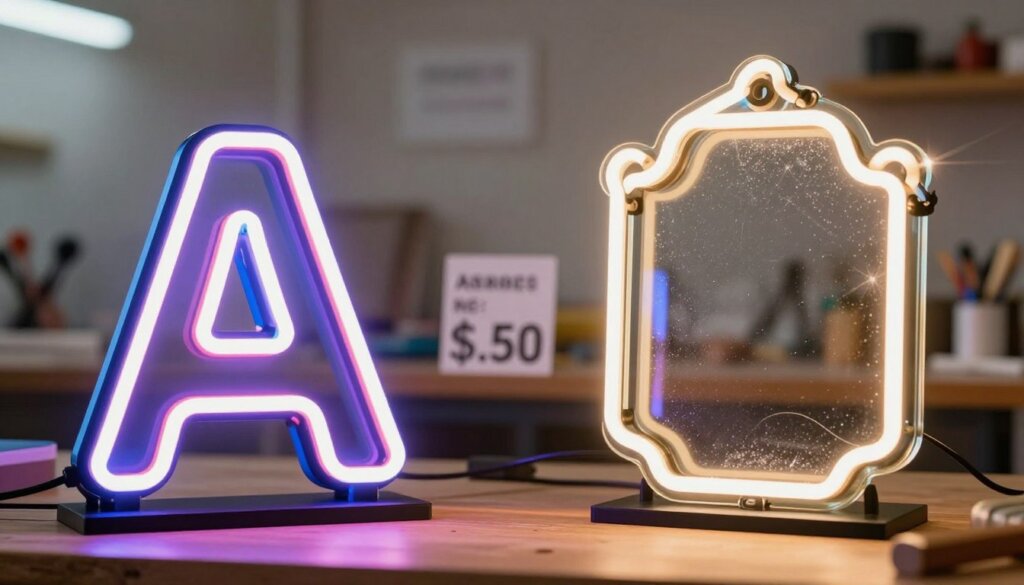
When looking at value, consider the total cost over time. LED neons might start cheaper, but a glass sign can last longer. It’s like choosing between a reliable car and a custom-made classic. Both have their value, but it’s different.
In summary, while LED neons might seem cheaper, glass neons offer durability and beauty. It’s key to think about what you need and choose wisely.
Choosing the Right Option for You
When deciding between LED and glass neons, think about your style and needs. The right choice can boost your brand and make sure your lighting works well. Here are key points to consider.
Factors to Consider
First, think about where you’ll put the neon. Is it indoors or outdoors? This affects how long it lasts and how much energy it uses. Next, think about how often it will be on. LED neons save energy, which is good for signs that are on a lot.
Personal Preferences
Your style matters a lot here. Glass neons are perfect for a classic, high-end look. They have a vintage charm that many love. But, if you want something modern and bright, LED neons are the way to go.
Use Case Scenarios
Let’s look at examples. A cozy coffee shop might pick glass neons for a warm feel. But, a busy pop-up shop might choose LED neons for their easy setup and bright colors. Each example shows how different needs lead to different choices.
By thinking about these points, you can pick the neon that’s right for you. It will make your space even better.
Case Studies
Let’s explore how neon signs are used in real life. They are found in many businesses, thanks to their ability to grab attention. Both LED and glass neons have their own benefits, making brands stand out and engaging customers.
Businesses Using LED Neons
Trendy restaurants and bars love LED neons for their bright colors and energy-saving features. For example, a downtown bar has a glowing LED cactus in its window. This sign not only draws in people but also shows the bar’s fun vibe.
Retail boutiques also use LED neons to look modern and welcoming. A chic boutique in a busy shopping area has a bright LED neon sign. It makes the store stand out and improves the shopping experience.
Businesses Using Glass Neons
Classic glass neons bring a sense of nostalgia and charm. A historic theater in the city has a stunning glass neon marquee. Its warm red letters remind people of old Hollywood and attract crowds for evening shows.
A vintage diner also uses glass neons to create a retro feel. The glowing signs add to the diner’s look, taking customers back in time.
Hybrid Examples
Some businesses mix LED and glass neon signs for the best of both. A creative agency has a sign that looks like glass neons but uses LED for energy savings. This way, they keep a classic look while saving on energy costs.
These examples show how versatile neon signs are. Whether it’s the modern look of LED neons or the timeless charm of glass neons, businesses can make a lasting impression and create unforgettable experiences for their customers.
Future Trends in Neon Lighting
Neon lighting is on the verge of a comeback, thanks to new tech and a love for the past. We’re seeing exciting changes that mix modern looks with old-school skills.
Innovations in LED Technology
LED tech is making neon lights smarter and more flexible. Here are some cool updates:
- App-Controlled Colors: Now you can change neon colors with your phone!
- Ultra-Thin Strips: These strips let you create more designs without losing brightness.
- Smart Home Integration: Neon lights can now work with your smart home systems.
These new features make neon lights not just functional but also visually stunning.
Revivals in Glass Neon
There’s also a comeback for handcrafted glass neon. This is because people want real, not just digital, things. Many businesses are going for:
- Handcrafted Designs: Each piece is unique, making them very popular.
- Classic Aesthetics: Glass neon’s warm light adds charm to any place.
- Artisan Craftsmanship: People love the skill and creativity in these pieces.
This mix of old and new is fascinating for both buyers and designers.
Predictions for the Market
The neon lighting market is set to grow, with both new and old styles. Hybrid options that mix LED and glass neon are becoming popular. As one expert said,
“The future is bright—literally!”
Whether you’re into the latest trends or prefer classic designs, neon lighting has something for you. Watch these trends as they influence your choices in the future.
Conclusion: Which One to Choose?
Exploring neon signs shows us both LED and classic glass have their perks. Each type has its own charm, making them great for brand visibility and engaging customers. Your choice depends on your goals, budget, and style.
LED neons are known for being energy-efficient and flexible. They’re lightweight, simple to install, and come in many colors. Classic glass neons, on the other hand, offer a nostalgic, artistic look. They create a warm, inviting atmosphere.
Think about what’s important to you. Do you prefer the long-lasting LED technology or the timeless beauty of glass? Both have their strengths. The right choice is the one that fits your vision and improves your space.
Choosing LED or glass, both will light up your space beautifully. Start your journey to stylishly light up your world!

