


Ever wondered what makes a beach flag pop? In a world full of colors and designs, the right template is key. It can highlight a seaside event, mark safe swimming spots, or boost your brand’s presence.
Welcome to your ultimate guide for beach flag design! We’ll cover everything from the basics to creating stunning graphics. You’ll learn about the purpose of these flags, choosing durable materials, and designing eye-catching graphics.
By the end of this guide, you’ll know how to make a beach flag that grabs attention and conveys your message. Let’s start and unleash your creativity!
Key Takeaways
- Understand the purpose of beach flags for effective communication.
- Select durable materials to withstand outdoor conditions.
- Design graphics that capture attention and convey your message.
- Learn the essential steps for creating a stunning beach flag.
- Enhance brand visibility with well-crafted templates.
Understanding Beach Flags and Their Purpose
Beach flags are key to keeping beaches safe and visible. They show water conditions and promote events and businesses. Knowing about beach flags can make your beach time better.
What Are Beach Flags?
Beach flags are tall, portable signs on poles. They wave in the wind, making them easy to see from far away. Lifeguards use them to warn about water safety, and businesses to get noticed.
Importance of Beach Flags
Beach flags are very important. They help keep people safe and make beaches more visible. Lifeguards use them to send safety messages, and businesses to attract customers. A well-placed flag can share important info, making beaches safer and more appealing.
Types of Beach Flags
There are many types of beach flags, each for a different use. Here’s a look at some common ones:
| Type of Flag | Shape | Best Use | Wind Resistance |
|---|---|---|---|
| Feather Flag | Curved | Promotions | Good |
| Teardrop Flag | Teardrop | Branding | Excellent |
| Rectangular Flag | Rectangular | Safety | Fair |
Each flag has its own benefits. Choosing the right one depends on your needs. Whether for safety or marketing, knowing your options is key.
Materials Needed for Making Beach Flags
The life of your beach flag depends on the materials you pick. Choosing the right fabrics and printing methods makes it last longer and look bright. We’ll look at different fabrics, printing ways, and tools you need to put it together.
Fabric Choices for Durability
Durability is key when picking fabric. Here are some top picks:
| Fabric Type | Durability | Weight | Best For |
|---|---|---|---|
| Polyester | High | Lightweight | Bright colors, quick drying |
| Nylon | Very High | Medium | Strong winds, detailed prints |
| Canvas | Moderate | Heavy | Sturdy designs, outdoor use |
Printing Options for Design
Choosing the right printing method is key for a pro look. Dye-sublimation is top-notch, as it colors the fabric fibers. It keeps your design looking good for a long time. For simple designs with bold graphics, screen printing is great.
Tools Required for Assembly
To make your beach flag, you’ll need some basic tools:
- A sturdy sewing machine for hems
- Grommets for attaching the flag to the pole
- A sharp rotary cutter for clean edges
As a crafting expert says,
“The right tools and materials set the foundation for a successful project.”
Starting with the basics of pludmales karoga izgatavošana means you’re on your way to a pro result. It will stand up to salty air and windy days.
Designing Your Beach Flag: Creative Ideas
Designing your beach flag is an exciting journey. It’s your chance to show off your personality and message. Use vibrant colors and unique designs to make your maketu pludmales karogs stand out.
Choosing the Right Colors
Color is key in how people see your beach flag. Bright colors like orange and yellow bring energy and warmth. Cool colors like blue and green bring calmness and trust.
Think about where your flag will be. A flag on a sandy beach should stand out against the natural colors.
Incorporating Logos and Branding
Keep your logo simple when adding it to your flag. A clean, scalable logo looks good even when the flag moves. Make sure your branding is clear but not too much.
This balance helps share your message and keeps the design interesting.
Aesthetic Elements to Consider
Adding aesthetic elements can make your flag more interesting. Use gradients, wave motifs, or drop shadows. These add depth without overwhelming the main message.
Try out different layouts digitally before you decide. This helps you see how the flag will look in real life.
| Color | Emotion | Usage |
|---|---|---|
| Bright Orange | Energy | Attract attention |
| Yellow | Warmth | Inviting atmosphere |
| Blue | Calm | Trust and reliability |
| Green | Peace | Natural harmony |
Designing your beach flag is more than looks; it’s about making a statement. With the right colors, logos, and creative elements, your flag can show off your brand or event. So, let your creativity shine and start designing!
Steps to Create Your Beach Flag
To make your beach flag come to life, follow a few easy steps. Each step is key to making sure your flag looks amazing and stands up to the weather.
Preparing the Flag Template
Begin by making a detailed template with graphic design software like Adobe Illustrator or Canva. Choose the right size for your flag and keep all designs away from the edges. This step helps avoid mistakes later on.
Printing Techniques Explained
When it’s time to print, think about your options. Dye-sublimation is great for full-color designs that won’t fade. Direct-to-fabric printing gives deep colors with less setup. Pick the best method for your design and budget.
Cutting and Assembly Process
After printing, it’s time to cut and put your flag together. Place the fabric flat and use a rotary cutter for straight cuts. For strength, sew a double-stitched hem around the edges. Also, add grommets at the pole sleeve openings for easy setup. The whole pludmales karoga dizains process is a mix of creativity and precision. Take your time for the best results.
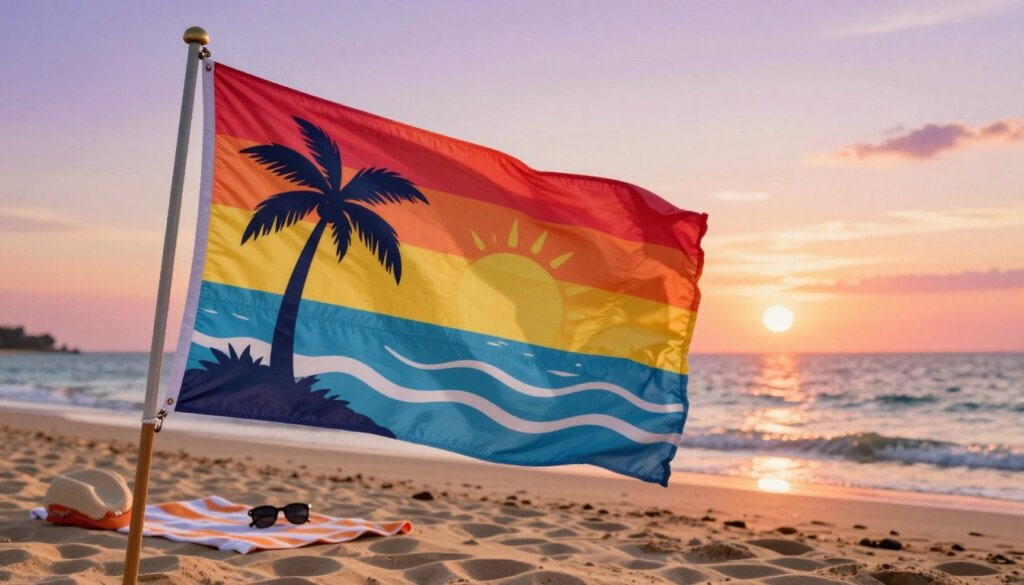
How to Choose the Right Size for Your Beach Flag
Choosing the right size for your beach flag is key to making it stand out. The size affects how visible it is. A small flag might get lost, while a too-large one could be hard to handle and might break rules.
Think about how far people need to see your flag. For example, a 11.5 feet tall flag is good for 100 feet away. Sizes range from small (6.5 ft) for close spaces to large (16 ft) for busy areas.
Here are some tips:
- A 10-foot teardrop flag is perfect for marking a beach entrance.
- For big events, a 13-foot feather flag grabs attention.
As you work on your pludmales karoga veidošana (beach flag creation), check the pole’s height and wind resistance. A well-sized flag boosts visibility and looks great at your event.
Adding Personalized Touches to Your Flag
Making your beach flag unique can grab attention and share your message well. A special flag stands out and speaks to your audience. Here are some creative ways to make your beach flag your own.
Customizing Text and Messages
Text should be clear and easy to read from afar. Choose bold, simple fonts for the best visibility. Catchy phrases like “Surf’s Up Savings!” or simple messages like “Event Entrance” can really make your flag pop.
Using Unique Graphics and Images
Graphics and images bring personality to your flag. Think about adding stylized waves, palm tree silhouettes, or product photos. Make sure the maketu pludmales karoga materiāli can handle detailed prints well. This keeps your designs sharp and professional.
For a unique touch, add QR codes that link to your website or social media. This is a great way to connect with tech-savvy beachgoers and share more about your brand.
| Element | Purpose | Tips |
|---|---|---|
| Text | Conveys message | Use bold, clear fonts |
| Graphics | Adds personality | Choose relevant images |
| QR Codes | Engages audience | Link to social media |
In summary, adding personal touches to your beach flag can make it unforgettable. Keep your design simple and meaningful, showing off your unique identity.
Ensuring Your Flag Is Weather-Resistant
To keep your beach flag looking good, choose the right materials. Beaches can be harsh, with salt, sun, and rain damaging your flag. It’s key to pick weather-resistant options to keep it bright and strong.
Options for Water-Resistant Fabrics
Coated polyester and marine-grade nylon are top picks for water resistance. They keep moisture out and dry fast, perfect for changing weather. These fabrics help your flag stay in great shape and look good, even after rain.
UV Protection for Longevity
UV protection is also key for your flag’s life. UV protection in fabrics stops colors from fading. You can also use a UV spray after printing for extra protection. This is super important for pludmales karoga personalizēšana, keeping your designs looking new for many seasons.
| Fabric Type | Water Resistance | UV Protection | Durability |
|---|---|---|---|
| Coated Polyester | High | Moderate | Good |
| Marine-Grade Nylon | Very High | High | Excellent |
| Standard Polyester | Low | Low | Fair |
Setting Up Your Beach Flag
It’s time to place your beach flag and make your vision come to life. Setting up your flag right is key to making it stand out. The right tools and methods will help you do this.
Essential Tools for Setup
Before starting, get the tools you need for a good setup. You will need:
- Sturdy ground stake or cross base: This will give your flag the support it needs.
- Mallet: A mallet is key for pushing the stake into hard sand.
- Bungee cords or zip ties: These keep your flag in place and prevent it from being blown away.
Best Practices for Placement
Where you place your flag is very important. Here are some tips:
- Put your flag where it can catch the wind for better visibility.
- Avoid placing it near dunes or umbrellas that might block its view.
- Keep it away from the water’s edge to stop tides from damaging its base.
Safety Tips for Secure Installation
Safety is a top priority when setting up. Here are some important tips:
- Angle the pole slightly away from foot traffic to reduce the risk of accidents.
- Never leave your flag alone in stormy weather to avoid damage.
Knowing Kā sagatavot maketu pludmales karogam? also means setting it up right. A well-set flag not only stands tall but also gets noticed by beachgoers.
Maintenance Tips for Your Beach Flag
Looking after your beach flag can make it last longer. Regular care keeps it looking good and working well all year. Here are some key tips to keep your maketu pludmales karoga in great condition.
Cleaning Recommendations
Cleaning your beach flag right is key. Follow these steps for the best results:
- Hand-wash: Use mild soap and cool water to gently wash your flag.
- Avoid harsh detergents: These can strip away protective coatings.
- Rinse thoroughly: Make sure to remove all salt and sand from the fabric.
- Air-dry: Let your flag dry away from direct heat to prevent damage.
Storage Advice for Off-Seasons
When beach season ends, storing your flag right is important. Here are some tips:
- Roll, don’t fold: Rolling your flag loosely prevents creases that can damage the fabric.
- Choose a cool, dry place: Store your flag in a garage cabinet or similar location.
- Use a breathable storage bag: This keeps moisture away and helps maintain the flag’s condition.
By taking good care of your maketu pludmales karoga, it will look as great next summer as it did when you first got it.
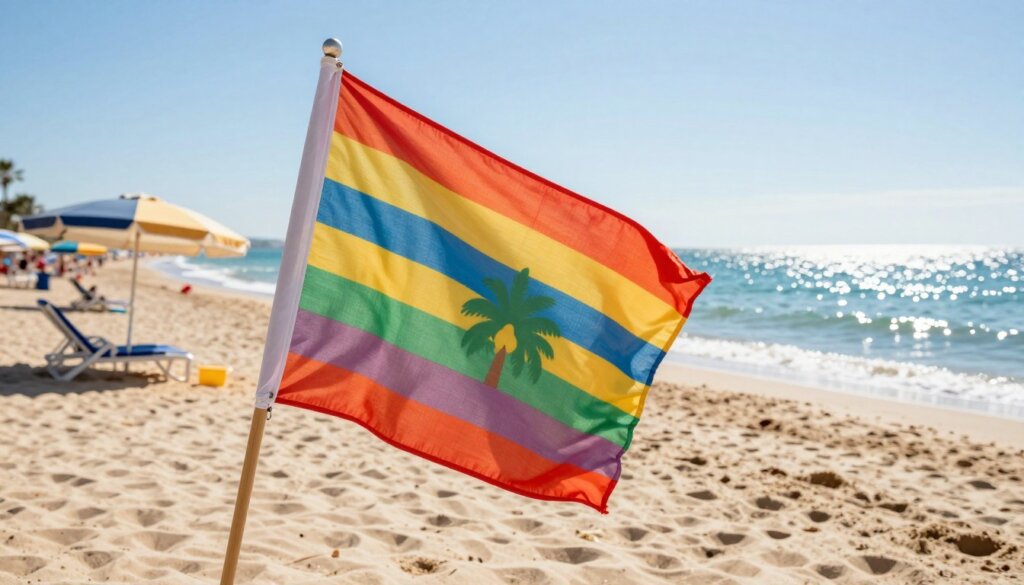
Inspecting Your Flag for Damage
Regular checks on your beach flag can stop small problems from getting big. This is key to keeping your flag in good shape. Here are some common issues to watch for during your checks.
Common Issues to Look Out For
- Frayed Edges: Over time, the edges of your flag may become frayed, which can weaken the fabric.
- Loose Grommets: Grommets can loosen due to wind and weather exposure, affecting the flag’s stability.
- Fading: High UV exposure can cause colors to fade, diminishing the flag’s visibility.
- Pole Sleeve Tears: The area where the flag attaches to the pole bears the most tension, making it prone to tears.
Spotting these issues early lets you fix them before they get worse. Here are some tips for fixing minor damage.
Repairing Minor Damage
- Use a Needle and UV-Resistant Thread: For small rips, a needle and durable thread can make effective repairs.
- Replace Missing Grommets: A simple grommet replacement kit can restore your flag’s integrity.
- Touch Up Faded Areas: Fabric paint can be used to refresh faded spots, keeping your flag vibrant.
These quick fixes are part of smart pludmales karoga izgatavošana (beach flag manufacturing) aftercare. By staying proactive, you’ll keep your flag flying high and avoid the cost of a full replacement.
Understanding Local Regulations
It’s key to know the rules about beach flags for safety and to follow the law. Before setting up your flag, learn about local laws and rules. Many coastal towns need permits for signs in public places. This helps avoid fines and makes sure your flag is welcome.
Reaching out to the parks department or city hall can give you the info on fees and size limits. Also, flags must not block lifeguard views or emergency paths. This is important for beach safety.
Some beaches might not allow flags during turtle nesting season to protect hatchlings. So, it’s important to research before setting up. Your maketu pludmales karogs (beach flag template) might need a permit number or follow certain color rules.
Permits and Licenses Required
Before you display your beach flag, check if you need permits or licenses. Here’s a quick look at what’s usually needed:
| Location | Permit Required | License Fees |
|---|---|---|
| City Beach | Yes | $50 |
| State Park | Yes | $75 |
| Private Beach | No | N/A |
Safety Guidelines for Beach Flags
Following safety rules is vital for using beach flags well. Here are some important tips:
- Make sure flags don’t block lifeguard views.
- Keep flags away from emergency paths.
- Watch for seasonal bans, like during wildlife nesting times.
By sticking to these rules, you can enjoy your beach flag and help make the beach safer and more fun for everyone.
Promoting Events with Beach Flags
Beach flags bring events to life, making them more visible and engaging. They act as eye-catching tools to guide people and share key messages.
When making your beach flags, think about effective messaging strategies. Use short, direct phrases like “Register Here,” “Live Music Tonight,” or “Free Samples.” This grabs attention fast and prompts action. Also, choose contrasting colors to make your text pop, making it easy to read.
Place your flags at eye level for better visibility. This height ensures your messages are clear, encouraging people to join your event. A good strategy is to line flags along paths, guiding your audience through.
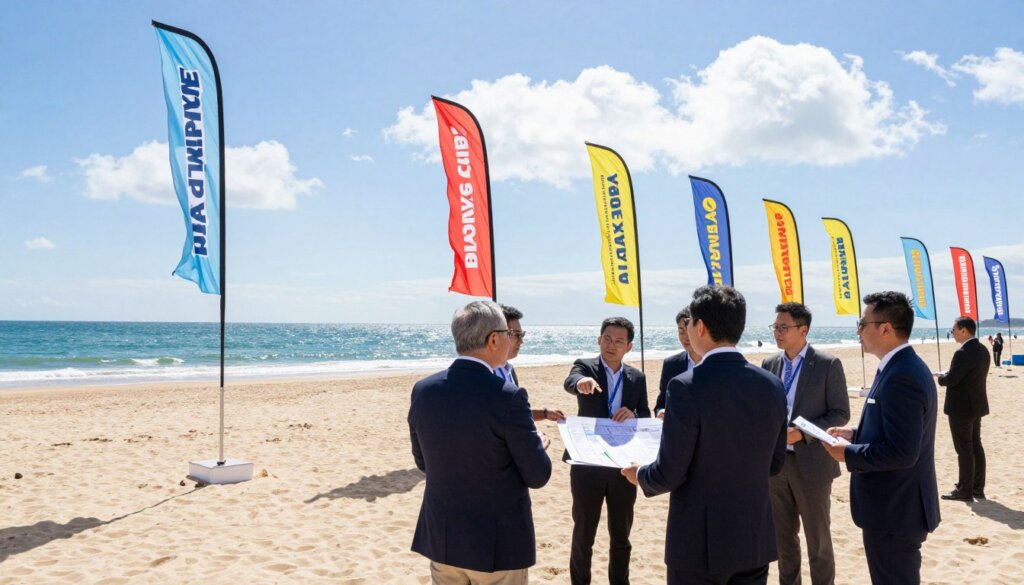
For example, a surf competition might use teardrop flags with sponsor logos at the entrance. Feather flags can mark the judging area, creating a unified look. This approach turns simple banners into directional and promotional tools.
In short, beach flags are more than decorations; they’re key marketing tools. With the right messages and designs, you can boost your event’s visibility and create lasting memories for everyone.
Beach Flag Placement Strategies for Events
Placing beach flags in the right spots can really make them stand out at events. Think about the best places and how to arrange them. This way, you can make a display that grabs people’s attention and shows them where to go.
When deciding where to put your beach flags, look for busy areas. Some top spots include:
- Near parking lots to catch the attention of arriving guests.
- Along boardwalks where people naturally walk.
- At intersections of pathways to create a funnel effect.
For events, a smart layout can make a big difference. Put the biggest flag at the main entrance to draw eyes. Then, place smaller flags leading to important spots like info booths or activity areas. This not only makes your flags more visible but also helps guide guests.
Remember, the wind direction is key when placing flags. To make them flutter nicely, face them all outward. A row of flags into the wind looks great and works well for pludmales karoga veidošana (beach flag creation). It makes your flags look professional and helps guide attendees.
| Placement Strategy | Optimal Location | Purpose |
|---|---|---|
| Main Entrance | Front of the event | Create a focal point |
| Pathways | Along foot traffic routes | Guide attendees |
| Activity Zones | Near key attractions | Draw attention to events |
Enhancing Visibility with Lighting
To make your beach flag stand out at night, add some good lighting. The right lights make it visible and add a fun vibe. Here are some tips to light up your beach flag well.
Ideas for Illuminating Your Beach Flag
Solar-powered spotlights are a great choice. Place them at the flag’s base for a soft light. They’re green and simple to set up.
LED string lights around the flagpole are another smart idea. They create a lovely glow and highlight your flag, perfect for evening events.
For a techy option, try portable floodlights with timers. They focus light on your flag, keeping it visible all night.
Safety Considerations with Lights
Visibility is key, but safety first. Make sure all electrical parts are weatherproof to avoid accidents. Also, hide or cover cords to prevent tripping.
Choose lights that don’t get too hot. High heat can harm your flag’s fabric. When picking maketu pludmales karoga materiāli, think about how they handle light. Some materials reflect light well, making your flag more visible at night.
With these lighting tips, your beach flag will be the center of attention, even after dark.
Eco-Friendly Beach Flag Options
Choosing eco-friendly beach flags is a great step for our planet. These flags are made from materials that are good for our oceans and beaches. They look great and help protect our environment.
Sustainable Material Choices
Look for beach flags made from recycled polyester (rPET). It’s made from recycled plastic bottles, reducing waste. Plus, it uses less energy to make than regular polyester.
Also, pick water-based inks for printing. They’re non-toxic and break down easily. This choice helps keep our air and water clean.
Minimizing Environmental Impact
Design a beach flag that lasts, not just a trend. This way, you won’t need to replace it often. It’s a smart move for pludmales karoga personalizēšana.
Use your design right on the fabric, not with vinyl stickers. Stickers can pollute our oceans. When your flag is done, recycle it. This way, the materials get a new life.
| Material | Benefits | Environmental Impact |
|---|---|---|
| Recycled Polyester (rPET) | Durable, lightweight | Reduces plastic waste |
| Water-Based Inks | Non-toxic, vibrant colors | Biodegradable, less harmful |
| Organic Cotton | Soft, breathable | Supports sustainable farming |
Tips for Selling Beach Flags
If you love beach flags and want to make money from them, good marketing is key. Show off your creativity and skill to draw in customers. Here are some tips for selling your beach flags.
Marketing Strategies to Consider
Using social media is a smart way to market your beach flags. Post bright photos of your flags at beaches. This can grab the attention of people who want to see your flags in action.
Also, think about letting customers design their own flags. This can make your flags more appealing and boost sales. Working with local event planners and resorts can lead to big orders, helping your income grow.
Setting Competitive Prices
When pricing your flags, show the value of your work. Look at what others charge but don’t sell yourself short. A 10-foot custom flag might cost $80–$150, based on design and materials.
Teaching customers about Kā sagatavot maketu pludmales karogam? (how to prepare a beach flag template) can make them appreciate your effort more. When people see the hard work you put into each flag, they’re more likely to buy from you again.
| Flag Size | Typical Price Range | Customization Options |
|---|---|---|
| 5 feet | $40 – $80 | Text only |
| 10 feet | $80 – $150 | Text and images |
| 15 feet | $120 – $200 | Full custom design |
Happy customers often come back and tell their friends about you. By using these marketing tips and setting fair prices, you can sell your beach flags and grow your business.
Conclusion: Final Thoughts on Beach Flags
Making a beach flag is more than a fun activity. It has many uses, like keeping people safe or promoting events. We’ve seen how important it is to pick the right materials, make sure it’s visible, and follow local rules.
Creating a great beach flag means combining creativity with usefulness. It can help promote events or keep everyone safe. Begin by drawing your ideas or using design software to make them real.
With the right steps, your beach flag will proudly show off your message. So, get your materials ready and let your imagination run wild. The beach is your blank canvas, and your flag is ready to be made!

